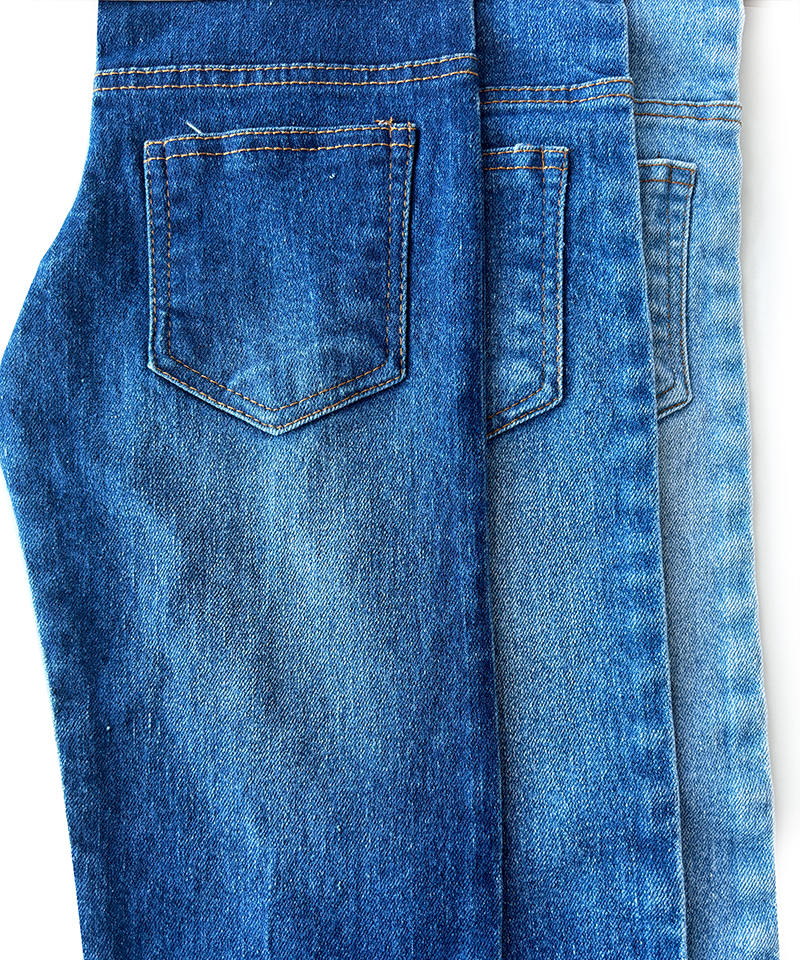
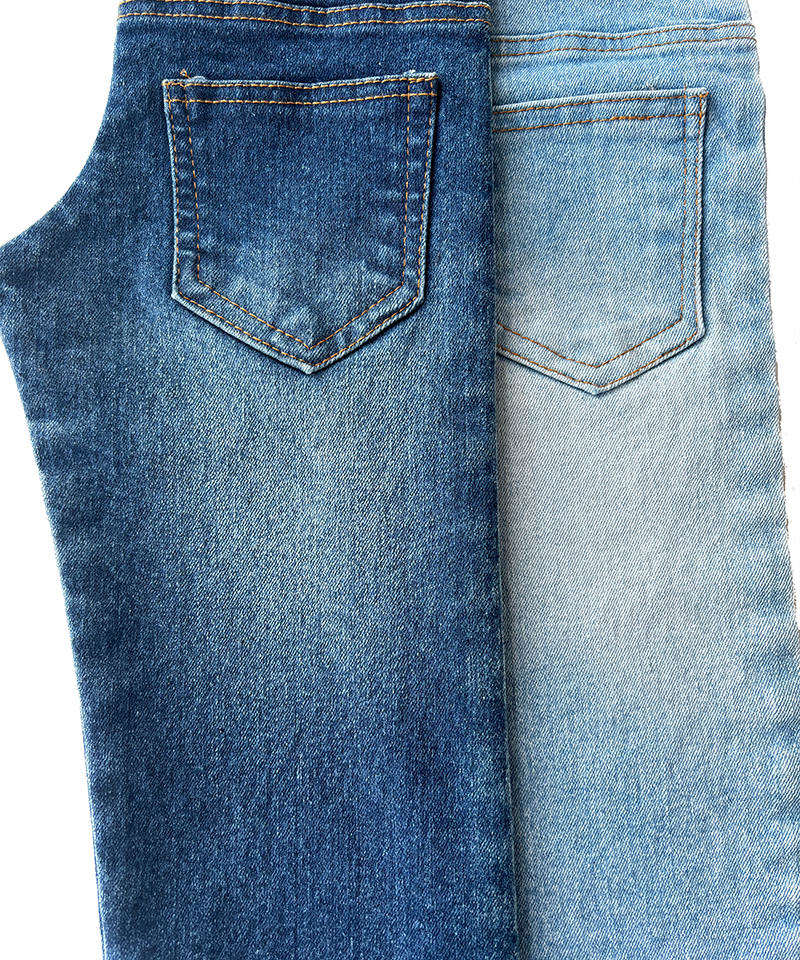
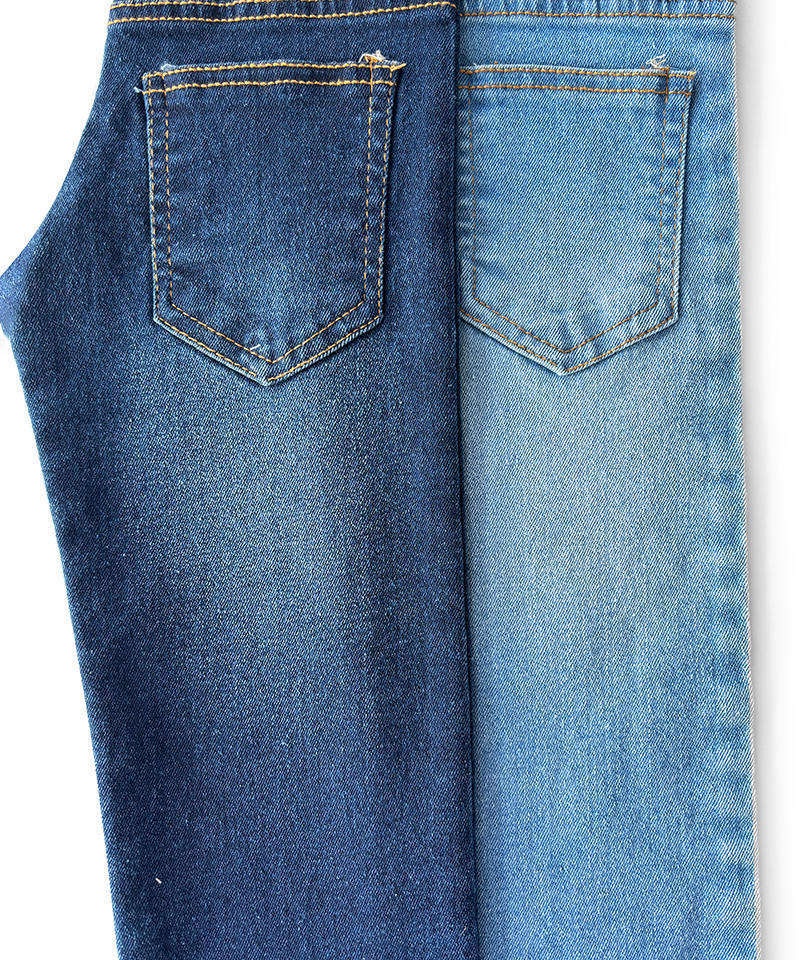
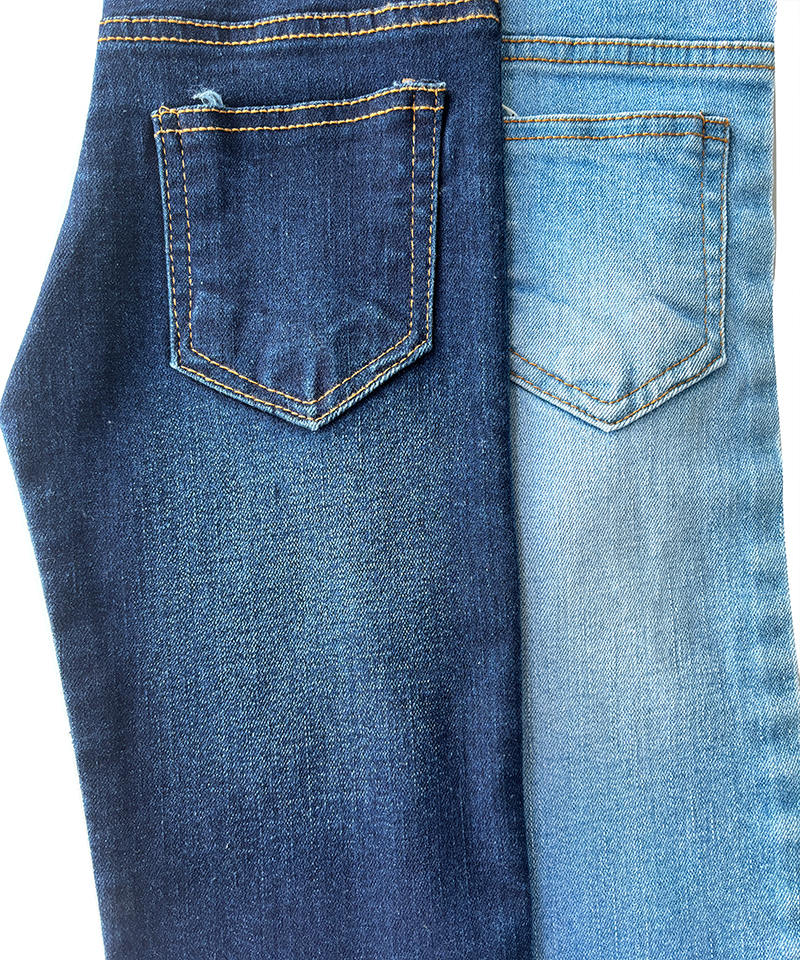
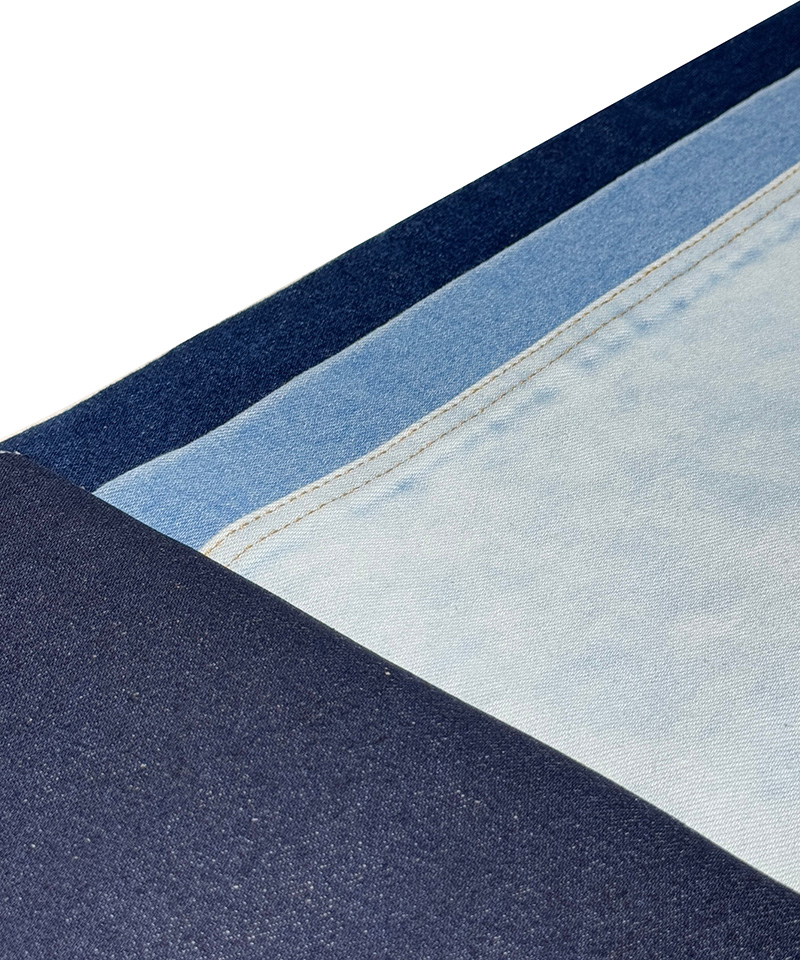
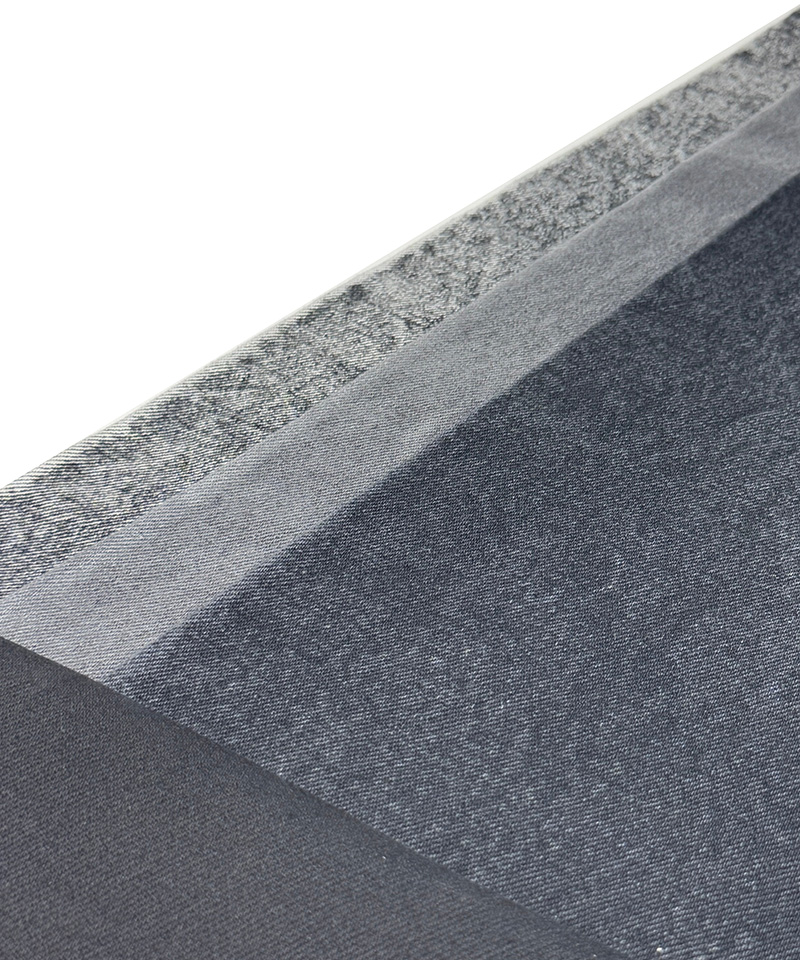
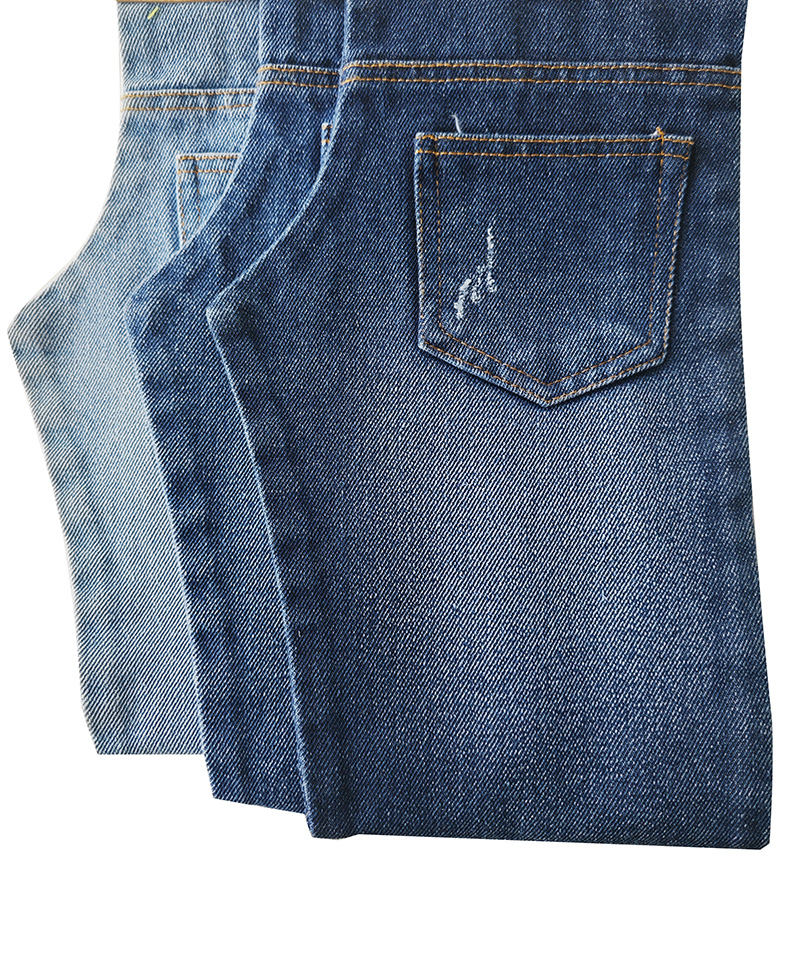
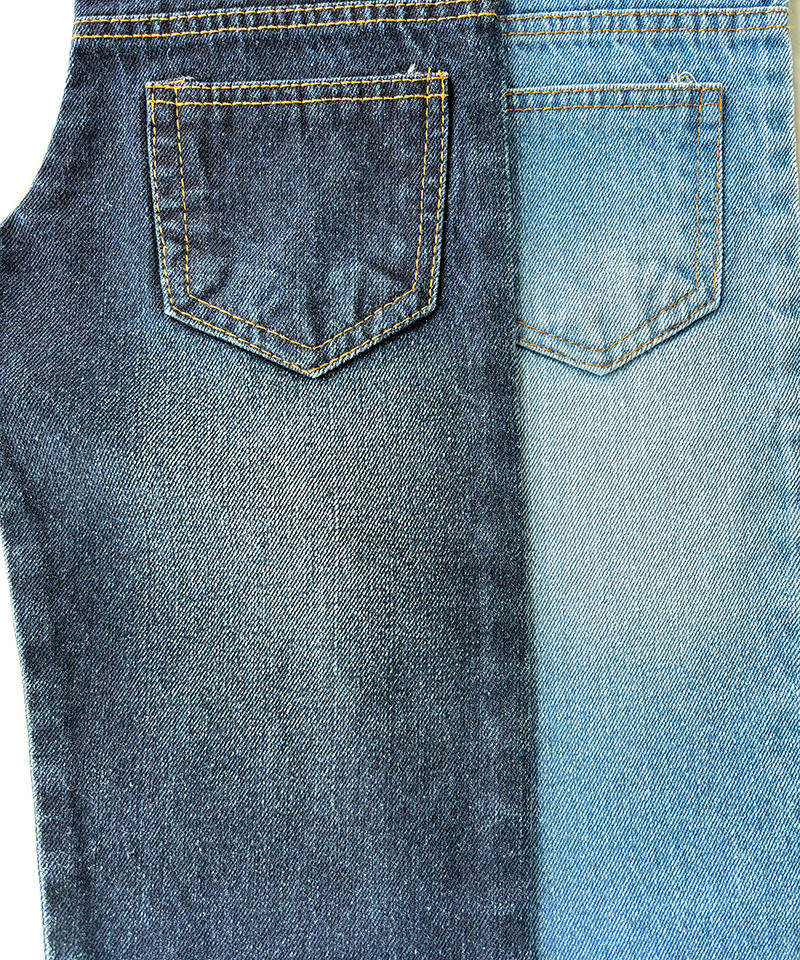
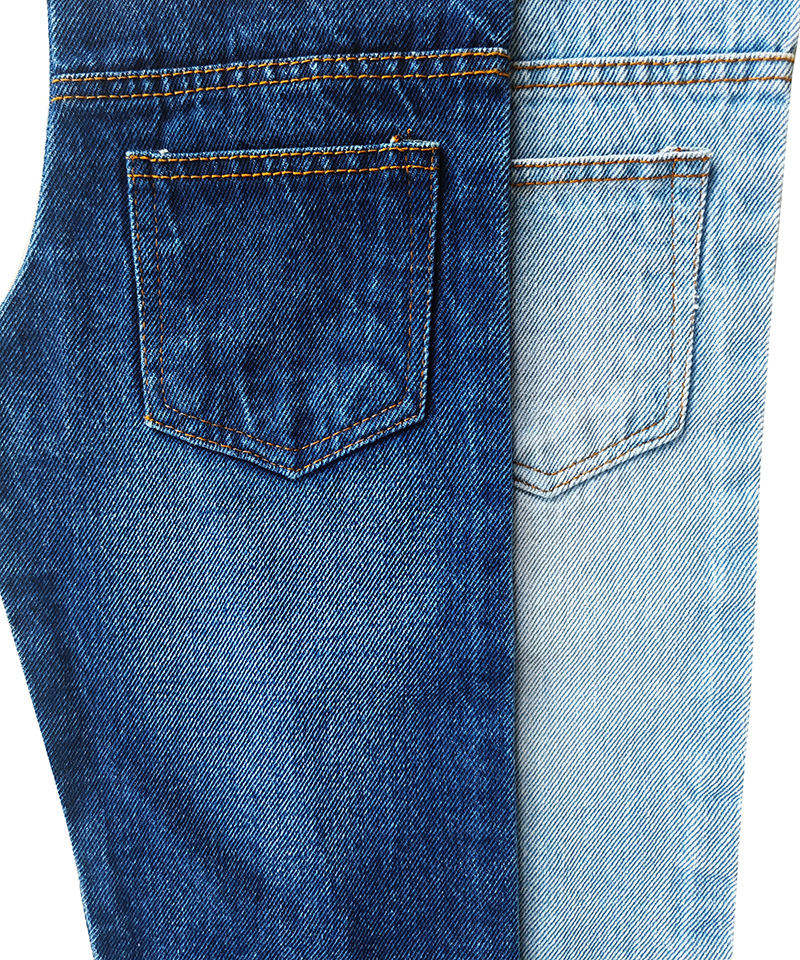
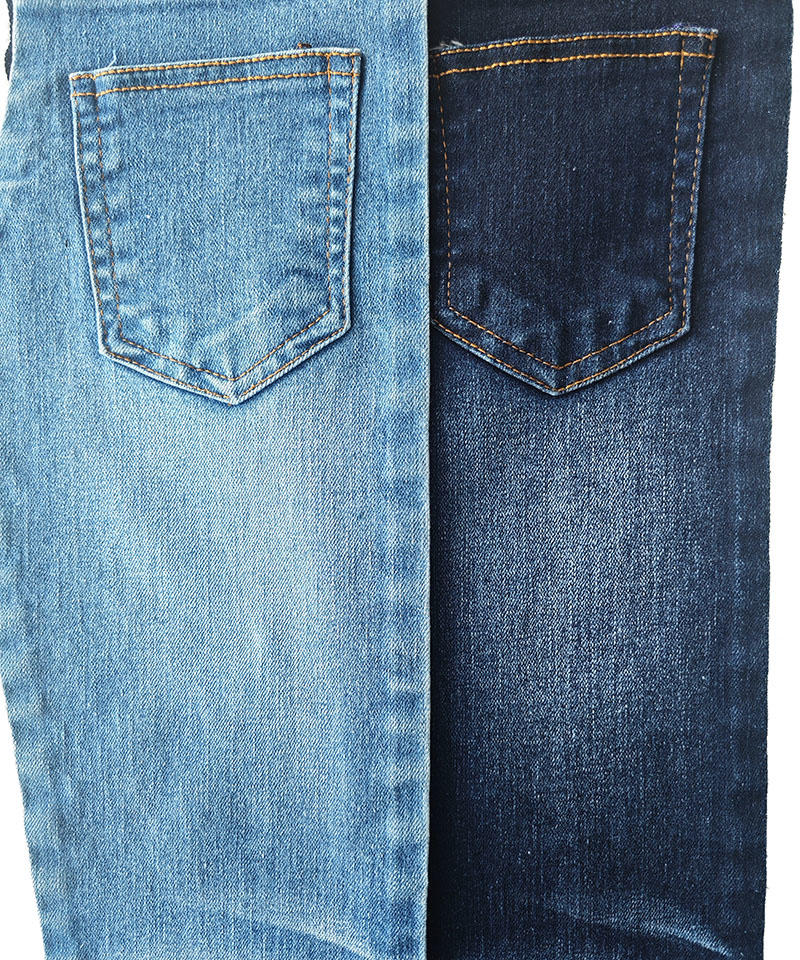
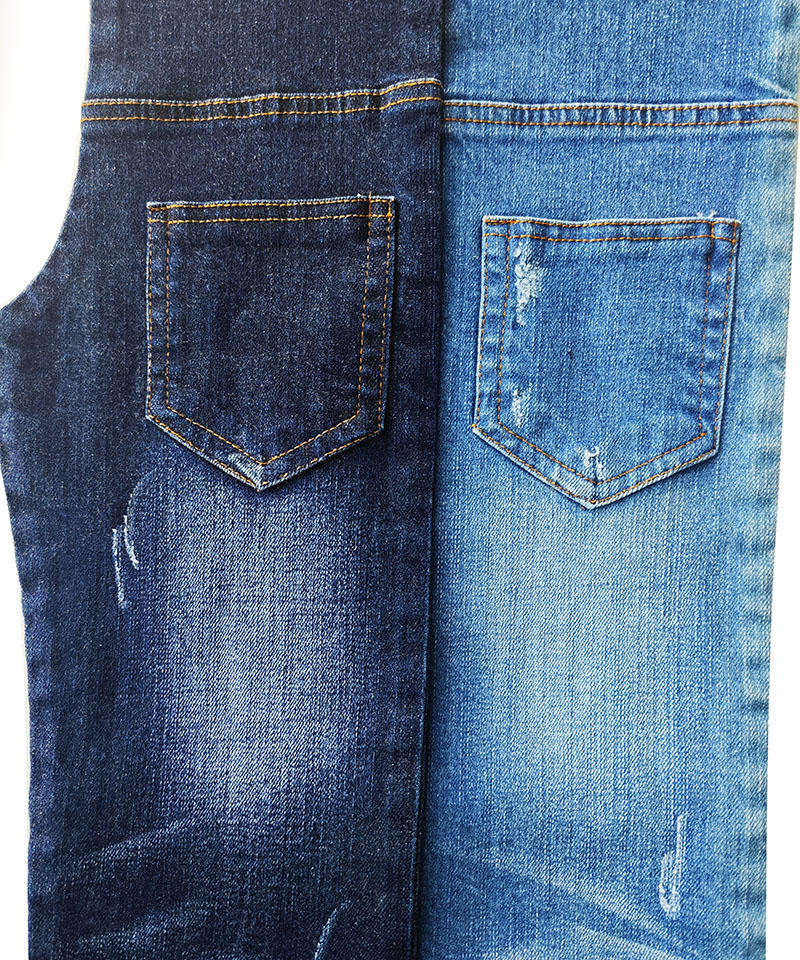
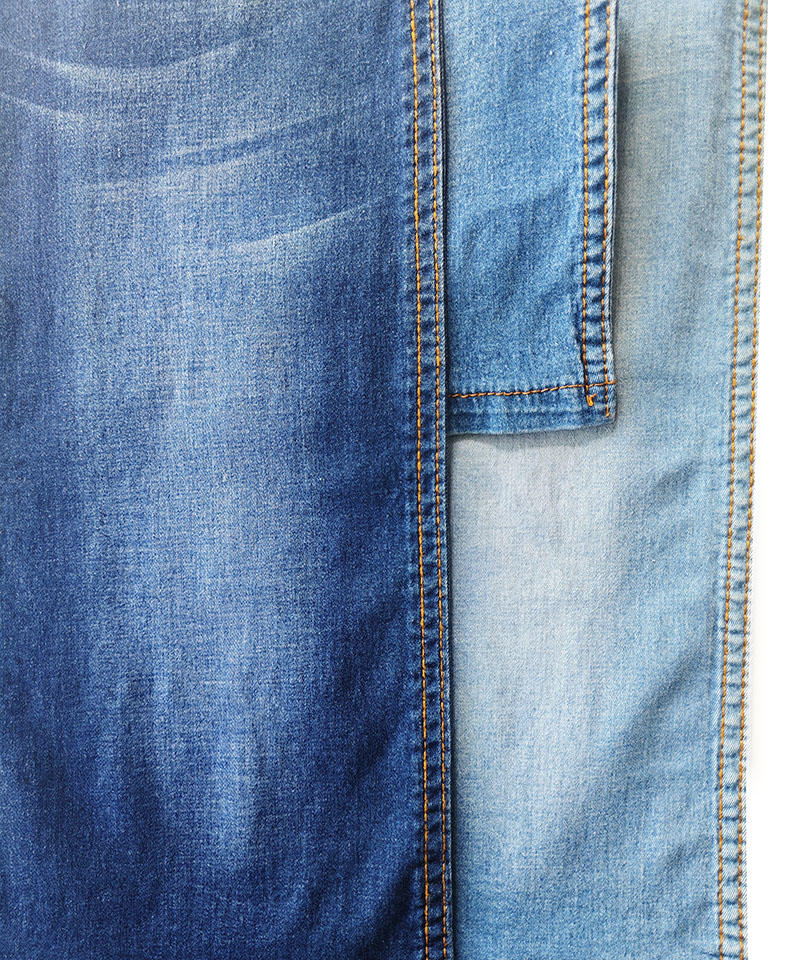
A denim buyer sits at a sampling table with four stretch swatches from three different mills, and every conversation circles back to the same trade-off: the woven options have the durability but feel dry and boardy, while the knits feel soft but read as activewear. Fake knit stretch denim fabric removes that trade-off by engineering a woven base that drapes, stretches, and feels like a knit while keeping the integrity of denim.
Changzhou Xinbaili Textile Co., Ltd., a denim mill that sells under the XINBAILI TEXTILE brand, builds this category on a dobby weave. The loom lifts warp yarns in a patterned sequence so that short floats break up the conventional twill diagonal and produce a compact, jersey-like surface. The fabric keeps a clean indigo or black denim face, but the back and the overall hand move noticeably toward a knit. For brands adding comfort-driven stretch programs, this is one of the most practical routes from classic denim aesthetics to knit-level softness. The material has moved from a niche novelty to a repeat specification in stretch denim development.
6.7-13.5 ozcatalog weight span
3stretch tiers available
2-6%typical elastane share
What Is Fake Knit Stretch Denim Fabric?
Fake knit stretch denim fabric is a warp-faced woven denim that uses a dobby weave structure to reproduce the looped texture and soft hand of a knitted textile while preserving the durability and dimensional control of a woven construction.
In a standard 3/1 twill, warp floats follow a steady diagonal across the fabric surface. In a dobby fake knit construction, the harness lifts the warp in a repeating but irregular float sequence, so the face reads as a fine, stitch-like texture instead of a clean twill line. The result is a smoother, more compact surface that sits closer to a jersey, yet the yarns remain interlaced on a loom, which keeps the fabric from stretching out of shape the way a true knit can.
Regular Stretch Twill vs Jersey Knit vs Fake Knit Dobby
The easiest way to evaluate the category is to place it against the two materials it competes with in the sampling room.
Structural and performance differences between regular stretch twill, jersey knit, and fake knit dobby denim.
Property
Regular stretch twill
Jersey knit
Fake knit dobby denim
Construction
3/1 diagonal weave
Looped yarn columns
Dobby float pattern
Hand feel
Dry, crisp
Soft, looped
Soft, compact, knit-like
Recovery at 2-4% elastane
Good
Moderate
High
Snag and abrasion resistance
High
Lower
High
Seam stability
Excellent
Moderate
Excellent
The practical implication is simple: if a design needs the visual language of denim and the recovery behavior of a woven fabric, fake knit stretch denim is the middle ground that does not require a compromise on seam quality or edge stability. If it needs maximum breathability and true looped stretch, a jersey remains the reference, but then the garment will show the limitations of knits in structured denim silhouettes.
Fake Knit Stretch Denim Fabric: Weights, Stretch, and Catalog Data
Weight is the first specification a buyer should lock down, because the construction behaves differently at each end of the scale. Reviewing the dobby fake knit range currently listed by Changzhou Xinbaili Textile Co., Ltd., weights run from 6.7 oz to 13.5 oz, with the densest cluster between 8.5 oz and 11 oz, where most commercial stretch denim programs operate.
Lightweight versions at 6.7-8.5 oz are built for shirts, dresses, and summer separates. The 9.5-11 oz band covers tapered pants, slim jeans, and skirts. Heavyweight 12-13.5 oz constructions support structured jeans and jackets where the woven body must hold shape.
Weight distribution across the dobby fake knit stretch denim catalog at Changzhou Xinbaili Textile Co., Ltd.
Stretch tier is the second filter. The catalog groups the range into standard stretch with roughly 2-3% elastane, high-stretch at 5-6%, and super-stretch formulations that prioritize recovery in highly fitted garments. The higher the elastane share, the tighter the weave has to be; a loose float pattern combined with high elastane will bag out at the knees after a few wears.
Representative fake knit stretch denim fabric specifications from the current product range.
Reference
Weight
Stretch tier
Typical end use
Indigo fake knitting, 9.6 oz
9.6 oz
Stretch
Slim jeans, tapered pants
Indigo fake knitting, 8.3 oz
8.3 oz
High-stretch
Fitted tops, leggings
Black-black fake knitting, 12.3 oz
12.3 oz
Stretch
Jackets, structured jeans
Indigo fake knitting, 13.5 oz
13.5 oz
Stretch
Heavyweight workwear
The 9.5-11 oz band carries the majority of commercial stretch denim programs in this category, which is why most mills stock more article numbers there than in any other weight segment.
For lighter garments, the same dobby language extends into lyocell and cold-feeling variants that pair fake knit softness with a cooler contact surface. These run in a separate program from the core cotton-elastane range, but they share the same weave logic and can be evaluated with the same tests.
Where Fake Knit Stretch Denim Outperforms Regular Stretch Twill
Fake knit stretch denim beats regular stretch twill in three measurable areas: surface softness, recovery in high-extension zones, and cleaner seams on curved panels.
Slim and skinny jeans. High-stretch fake knit versions hold knees and elbows without bagging because the compact float structure distributes tension across more yarn intersections.
Fitted dresses and bodysuits. The knit-like back face sits comfortably against the skin, which removes the need for a separate lining in many styles.
Shirts and soft jackets. Lightweight 6.7-8.5 oz options drape closer to a woven jersey, so a denim shirt no longer feels like cardboard.
Childrenswear. Woven durability plus knit-like softness reduces abrasion complaints at the knees and elbows.
The key metric to watch is the hand-feel-to-recovery ratio: a 9.5 oz fake knit stretch denim delivers the softness of a jersey with the dimensional control of a 10 oz woven twill, which is why fit-forward styles adopt it before basic five-pocket jeans do.
For reference, the current catalog places the full fake knit range on a single category page, from light 6.7 oz versions to 13.5 oz heavyweight goods, so a buyer can compare constructions before requesting samples.
That is also where the category has moved beyond novelty: brands that once ordered a single wash-test style now build entire stretch programs around dobby fake knit constructions, because the fabric answers both the comfort complaint and the durability complaint at the same time.
How to Evaluate Fake Knit Stretch Denim Fabric Before You Commit
Five physical tests, done with a swatch, a ruler, and a sewing machine, will tell you more than any spec sheet about whether a fake knit stretch denim will perform in production.
Check elastane content and recovery on the bias. Stretch a 10 cm swatch 30%, hold for 10 seconds, release, and measure residual deformation after five minutes. A properly built high-stretch fake knit should recover within 2-3 mm.
Rub the face and the back. The face should keep a clean indigo color, and the back should feel compact rather than fleecy, or the fabric will pill in high-friction areas.
Match the weight to the end use. Under 9 oz for tops and dresses, 9.5-11 oz for pants, 12 oz and up for jackets and structured jeans.
Run a seam test. Sew two plies with a 1.5 cm seam allowance and stretch across the seam line. Pucker and exposed floats indicate a weave structure too loose for garment sewing.
Review wash performance. Ask for shrinkage and twist data after one industrial wash, because low-twist yarns in some fake knit constructions skew more than a standard twill if not stabilized.
Ask the mill for the article number and the weight in ounces, not grams per square meter. Denim mills quote oz/yd2, and a unit mismatch at sampling creates dimensional surprises at bulk.
Most credible suppliers will also send a washed swatch alongside the greige sample. Use it to check color fastness and surface change after abrasion, because the float pattern that gives fake knit its soft surface also exposes more yarn to washing and wear.
Buyer Questions, Answered Directly
Is fake knit stretch denim fabric actually knitted?
No. It is a woven dobby construction that visually and tactilely mimics a knit. The stretch comes from elastane in the weft, not from looped yarns.
What elastane percentage should I specify?
For standard stretch, 2-3% is the norm. For high-stretch garments, 5-6% works best. For recovery-first fits such as leggings, super-stretch blends reaching 6% and above with a tightly engineered weave are the safer choice.
Will fake knit denim bag out at the knees?
Not if the weave is dense enough and the elastane content matches the garment's recovery demand. The dobby float pattern influences bagging more than elastane percentage alone.
What weights work best for which seasons?
6.7-8.5 oz suits spring and summer tops and dresses. The 9.5-11 oz band works across four-season pants. The 12-13.5 oz segment is the winter jacket and structured jean range.
If budget allows, test three weights from the same weave family before bulk: changing the weight by 1 oz moves drape and recovery more than changing the elastane percentage does.


 English
 Español