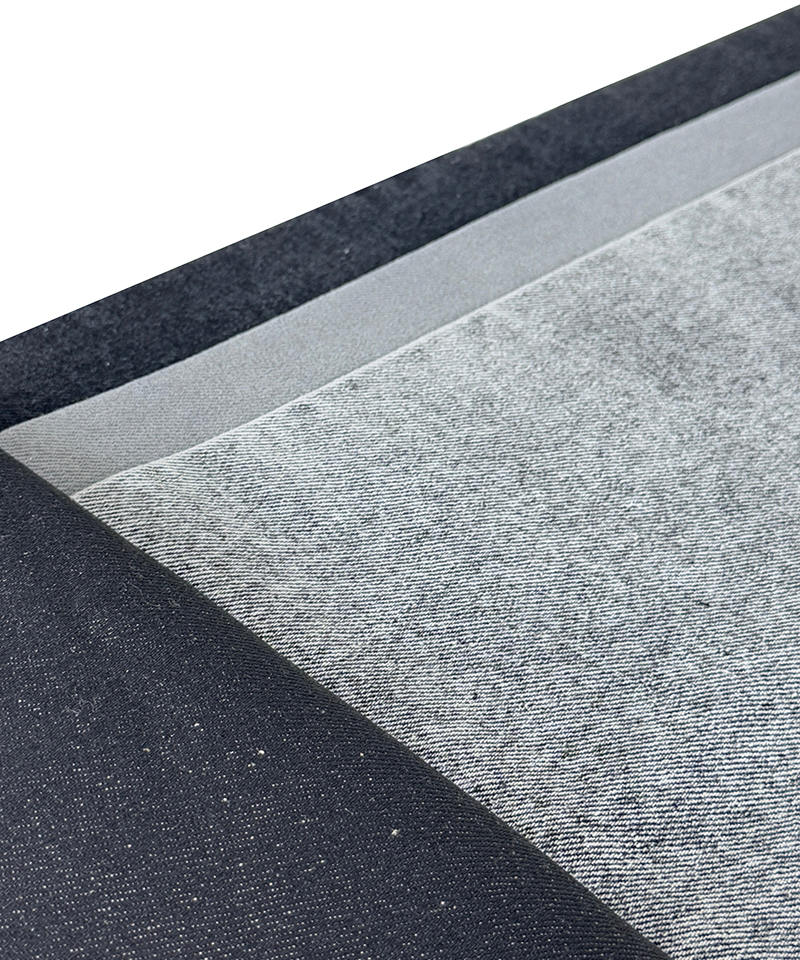
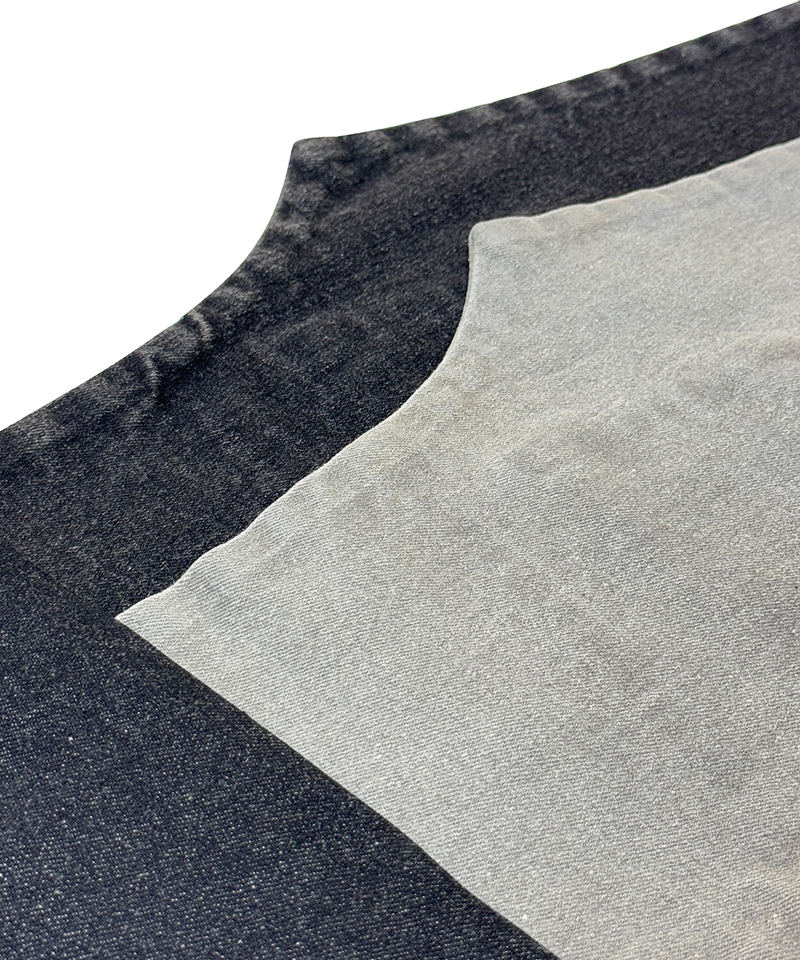
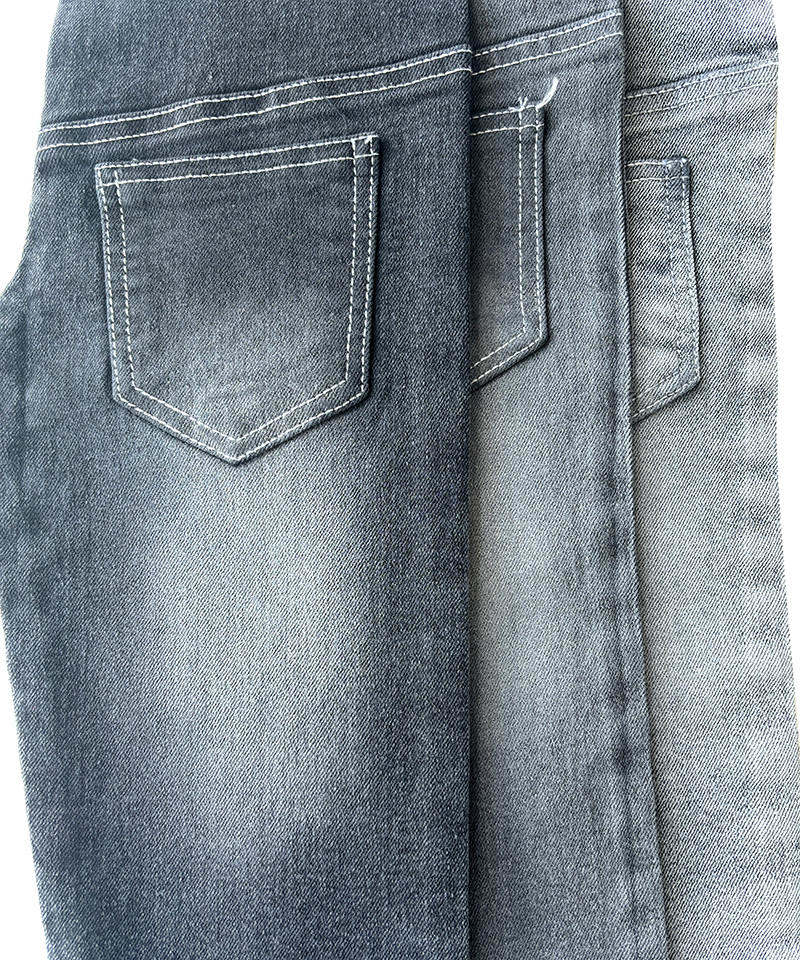
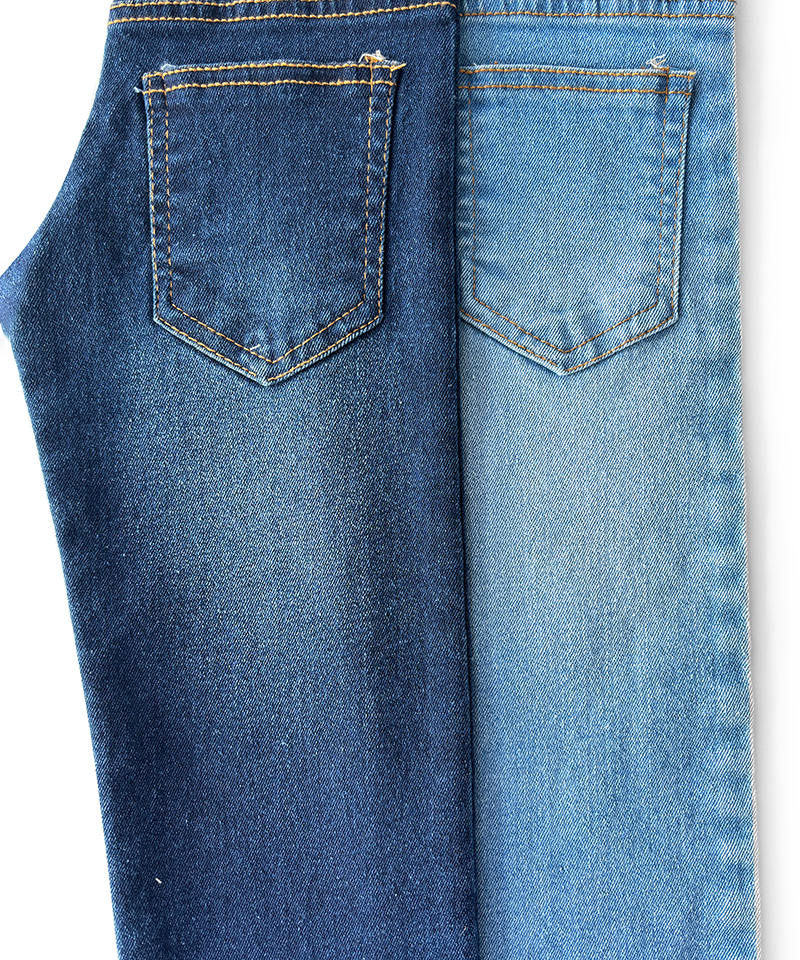
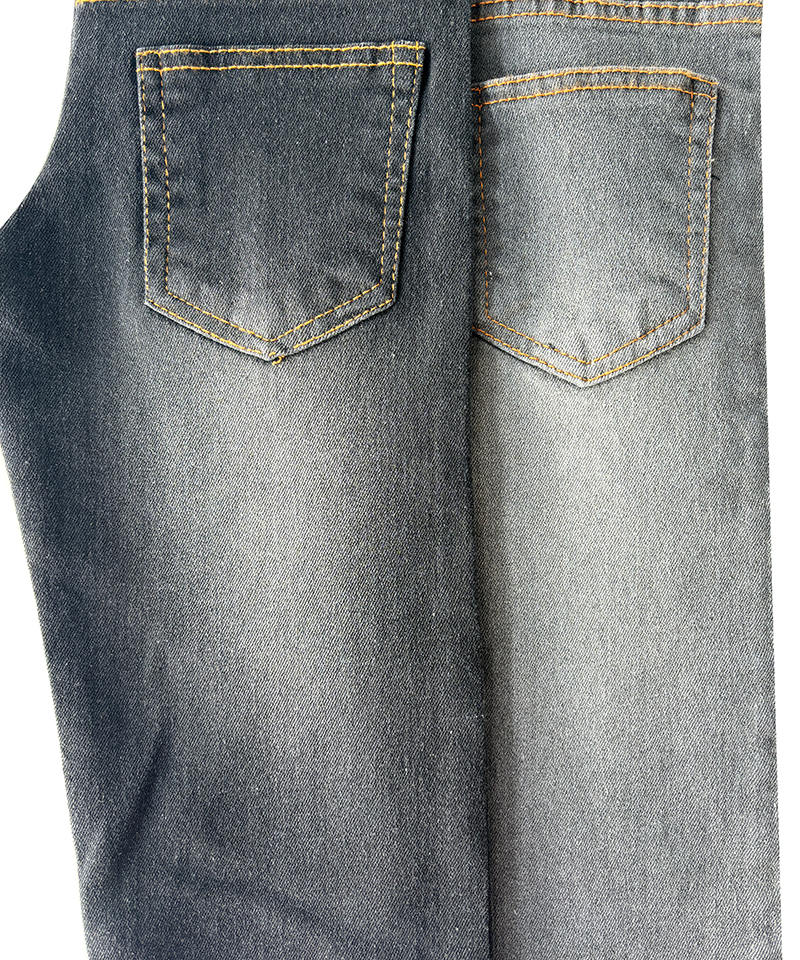
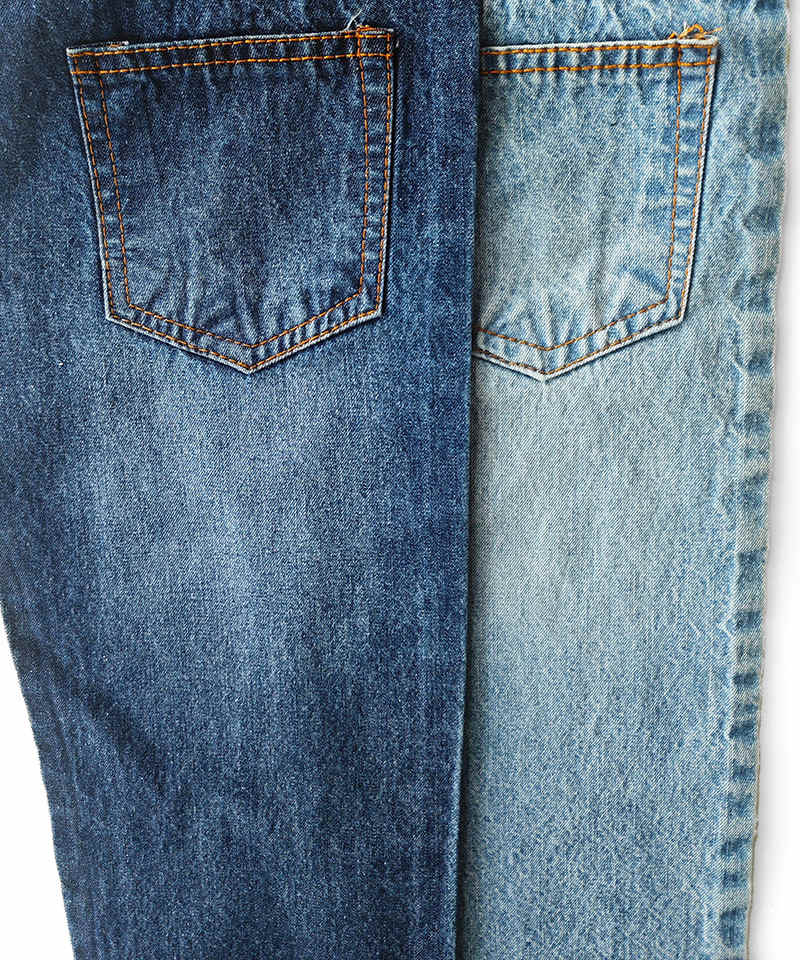
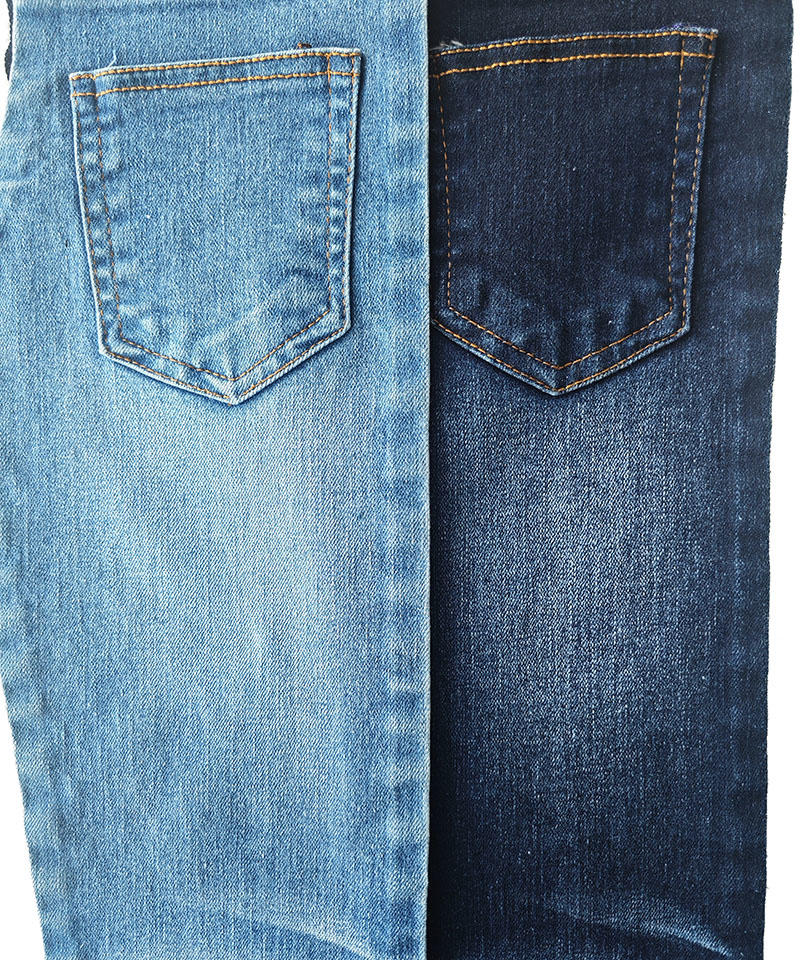
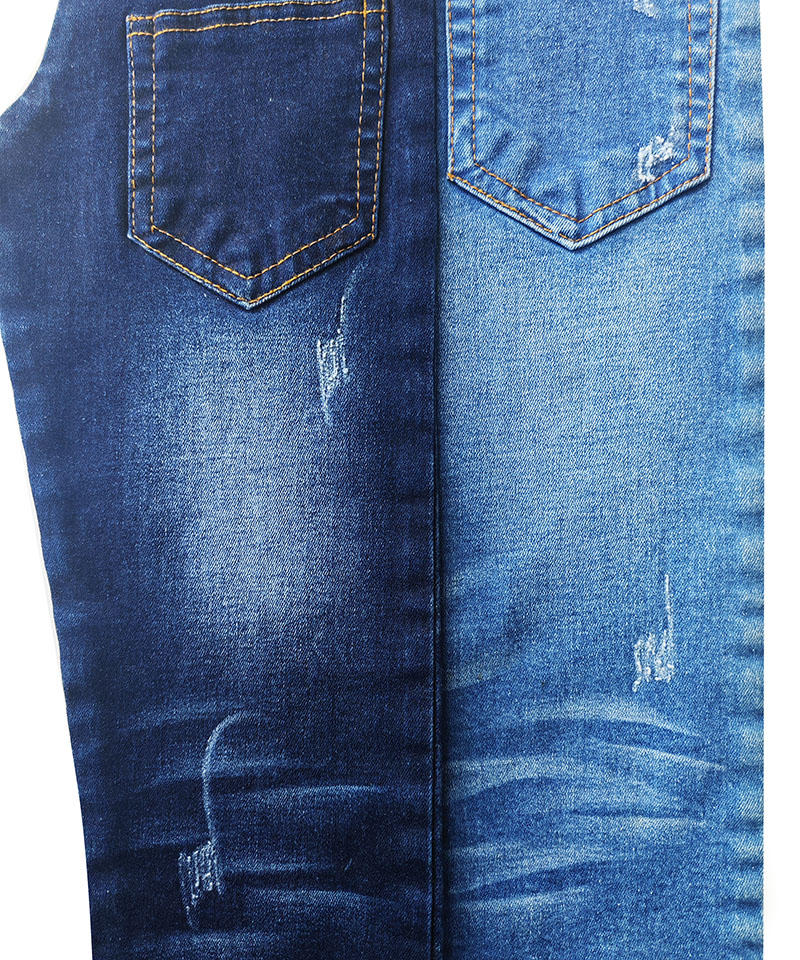
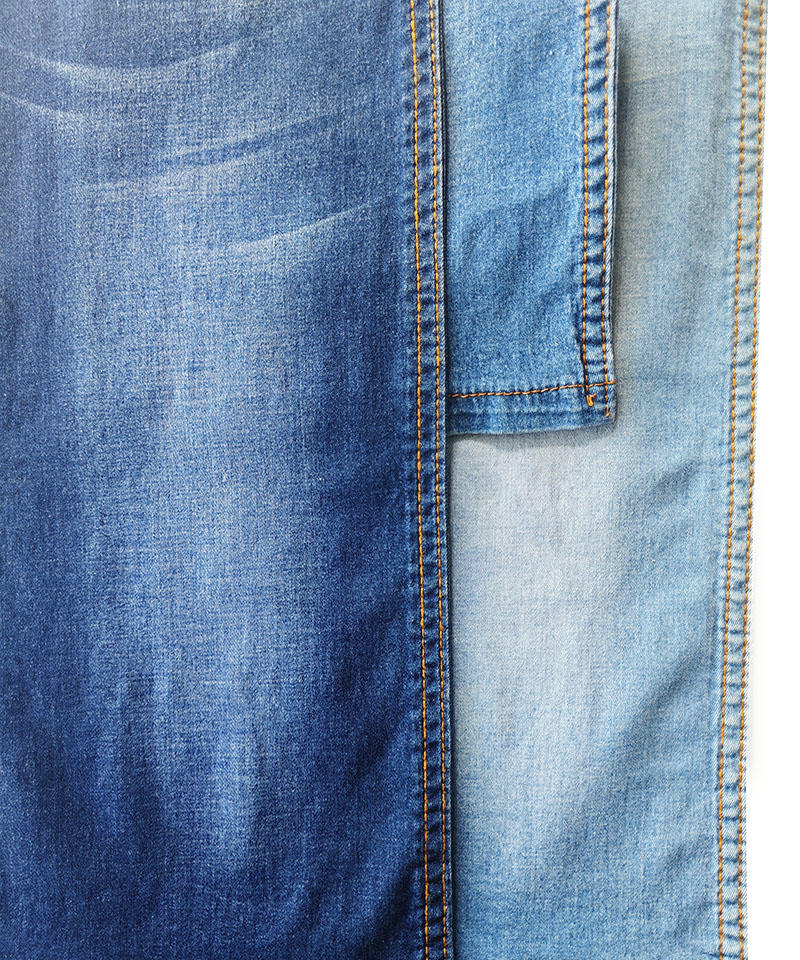
A denim sourcing manager spreads three black denim swatches across the table, all labeled 10.5 oz. To a non-specialist they look identical. To someone who buys woven denim for a living, they are three different products: one has a clean black face and a black back, another shows a greenish cast in daylight, and the third develops a reddish-bronze sheen after a 40 degrees Celsius wash. All three are sold as black denim fabric, and all three will behave differently on a sewing line and in a consumer wash.
Black denim is not indigo denim that happens to be dyed black. The dye chemistry, yarn preparation, weave selection, and finishing routine are all different, and each one changes how the fabric sews, fades, and holds depth. This guide covers the specifications that matter when sourcing black denim fabric from a woven mill, using the working range of Changzhou Xinbaili Textile Co., Ltd., a dedicated denim manufacturer, as a practical reference.
Black Denim Is Sulfur-Dyed, and That Explains Its Behavior
Black denim fabric is dyed with sulfur dyes on the warp yarn before weaving, and that dyeing route explains most of the visible differences between good and bad black denim.
Indigo wraps around the outside of cotton yarn, which is why indigo denim rubs off into white cores and high-contrast fades. Sulfur black penetrates deeper into the fiber, producing a solid, opaque face that covers yarn irregularities and reaches a depth indigo cannot deliver. The trade-off is sensitivity to process control: unfixed sulfur dye must be fully oxidized and rinsed after dyeing. When that step is skipped, the fabric can bleed in the first wash, show poor wet rub fastness, or develop a bronze cast by the third laundering.
Black/black construction is the other decision a buyer will meet. Standard black denim is warp-dyed only, so the back is ecru or grey. Black/black means both warp and weft are dyed black, keeping the reverse side and exposed yarn edges black. That matters for turn-ups, cuffs, and unlined jackets where the inside of the fabric is visible.
Core definition Black denim fabric is a woven cotton or cotton-blend fabric whose warp yarns are dyed with sulfur black, sometimes combined with indigo, to produce a solid dark shade characterized by deep color coverage, a black or tinted back, and a fade that shifts toward gray rather than blue.
Before approving a black denim sample, request the following from the mill:
The dye route: sulfur black, black/indigo, or another shade system, since each changes fastness.
Dry and wet crocking results measured on the finished, washed fabric.
A five-wash lab test, because bronzing and shade shift usually appear by wash three.
Confirmation of the back color if the design calls for black/black.
Weight First: 4.5 oz to 14 oz Decides the Garment
Weight is the first specification to lock down when sourcing black denim fabric, because it sets drape, durability, and sewing behavior before anything else.
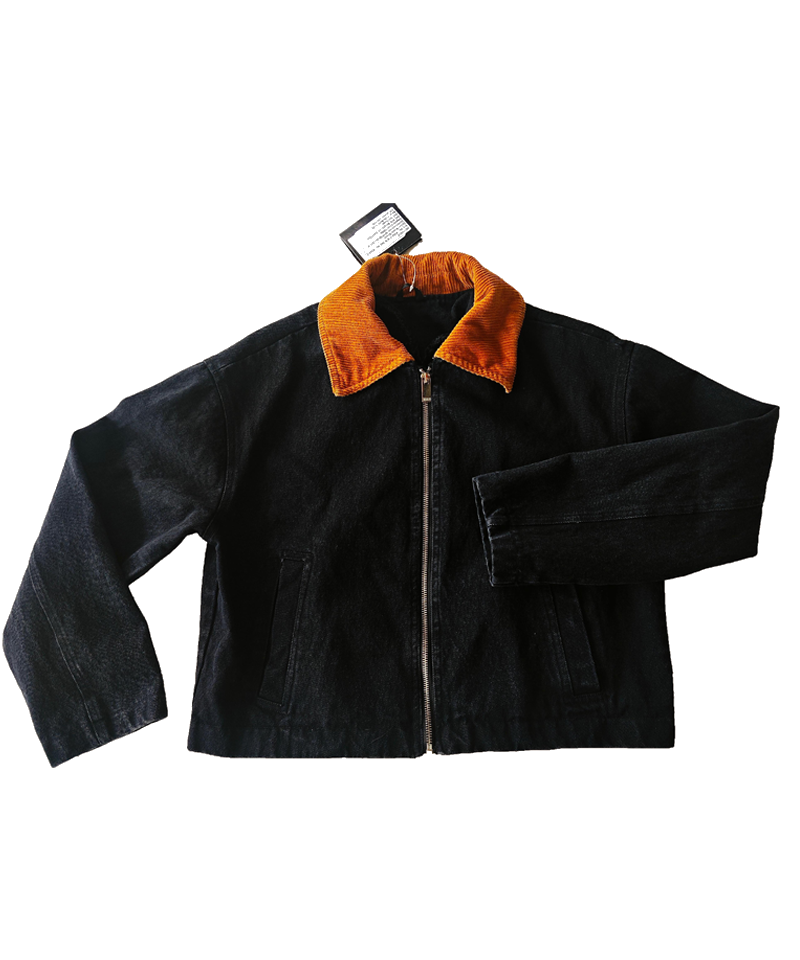
Mills quote black denim in ounces per square yard, and the apparel range runs from about 4.5 oz to 14 oz. Light constructions use fine yarns and a fluid hand for shirts and dresses; heavy ones are rigid and built for jackets and workwear. Fabric that is too light for the cut will sag and pucker at the seams; fabric that is too heavy is hard to topstitch and uncomfortable in a close fit.
4.5 ozLightest black denim in the range
13.7 ozHeaviest black denim listed
6Product categories with black shades
10-12 ozRange where five-pocket programs sit
Typical black denim fabric weight bands and their standard garment applications.
Weight band
Typical garments
Key behavior
4.5 to 7 oz
Shirts, blouses, light summer dresses
Fine yarns, soft drape, moderate opacity
7 to 9 oz
Skirts, shirting, childrenswear
Balanced hand, easy sewing, neat folds
9 to 12 oz
Five-pocket jeans, chinos, light jackets
Core jean territory, holds shape well
12 to 14 oz
Denim jackets, workwear, structured outerwear
Rigid or low-stretch, strong and durable
Black denim weight ranges by end use
A 12 oz pure-cotton black with non-stretch construction is the classic choice for a five-pocket jean or a structured jacket, because the weight carries the silhouette and the cotton breaks in with wear. XINBAILI's style 240924 in the pure-cotton series is a 3/1 twill, 12 oz, non-stretch black built for exactly that use.
Stretch recovery, not the percentage of elastane alone, determines whether black denim keeps its shape after a full day of wear.
Non-stretch black denim holds its line and becomes softer with wear, but it does not forgive movement. Stretch versions add 1 to 3 percent elastane for comfort, and cotton-polyester-elastane blends recover faster and resist bagging better than simple cotton-elastane because the polyester adds resilience. Poorly wrapped elastane breaks down in laundering, so the yarn construction matters more than the elastane percentage.
A 1 to 3 percent elastane range covers most stretch black denim programs, but recovery depends on the yarn wrap, not the percentage.
Comparison of non-stretch, stretch, and high-stretch black denim constructions.
Type
Elastane
Recovery
Best use
Non-stretch
None
No recovery, holds its line
Rigid jeans, workwear, jackets
Stretch
1 to 2 percent
Comfort recovery, minimal bagging
Regular and slim jeans, chinos
High-stretch
2 to 3 percent
Snug fit with active recovery
Skinny jeans, fitted trousers
Super-stretch
3 to 4 percent
Maximum ease, lower shape memory
Body-hugging silhouettes
Choose non-stretch when
The pattern needs a rigid, structured silhouette.
Workwear or heritage-style finishes are the target.
Garment washing will be heavy and you want minimal distortion.
Choose stretch when
Slim or skinny fits must ease over the leg.
All-day seated wear demands recovery at the knee.
The program includes fitted dresses or jeggings.
For a program that sits between rigid jeans and skinny fits, a black 3/1 twill around 10.7 oz with stretch is a workable midpoint. XINBAILI's style 65385 in the cotton-elastane series matches that profile.
Weave structure and finishing decide whether black denim reads as rugged, fluid, or dressed-up, even when the shade and weight are identical.
Three-over-one twill is the default for jeans: it shows a clear diagonal and handles abrasion well. Two-over-one twill is flatter and softer, common for shirts and lighter tops. Four-over-one satin creates a smooth, lustrous surface with better drape for dresses and skirts. Fake-knit and dobby constructions imitate a jersey hand while keeping denim's durability, which makes them popular for leggings and fitted tops.
The finish is just as important. Brushed or peach finishes add warmth for cold weather. Cold-feeling finishes leave a cool touch for summer. Bonded constructions add a membrane or backing for windproof outerwear. The same black warp can support completely different market positions depending on the finish.
Brushed or peach: soft, warm surface for cold-weather pieces.
Cold-feeling: cool contact for warm-weather styles.
Bonded: wind-resistant or waterproof outerwear constructions.
Enzyme or bleach wash: pre-worn surface effects on black.
When the brief calls for a black denim that behaves like a jersey, a fake-knit construction is the answer. The mid-weight stretch style 60015 in XINBAILI's dobby range combines the opacity of sulfur-dyed black with a knit-like, elastic hand.
How Black Denim Ages: Graying and Bronzing, Not Blue Fades
Black denim does not develop vintage blue fades; it grays out and loses depth, and it can show a bronze cast when dyeing or finishing is poor.
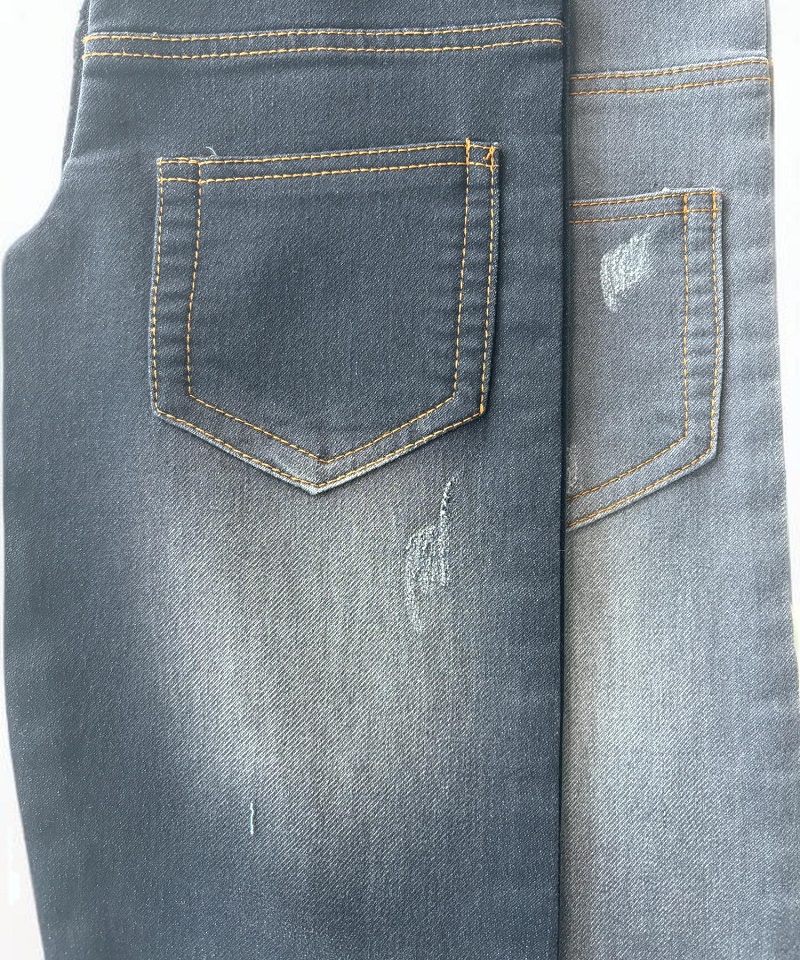
As cotton fibers wear, the sulfur-black surface is abraded away. Because the dye penetrated deeper than indigo, the worn area shows a lighter gray-black rather than a white core. This muted, urban wear-down is normal and can be deliberate, but it is not the high-contrast whisker effect of indigo. Bronzing is a defect: a reddish-bronze shimmer appears when sulfur dye is not fully oxidized or the fabric meets aggressive alkali. It usually shows between wash three and wash five, which is why a lab test beats a one-wash sample.
The five-wash test is the shortest reliable way to evaluate black denim. It reveals bronzing, crocking, and shade shift before you commit to bulk production.
Care routines after the factory change how black denim ages for the end consumer.
Wash inside out in cold water with a mild detergent.
Avoid chlorine bleach and optical brighteners; both shift sulfur black.
Air dry away from direct sunlight.
Keep black denim separate from light garments for the first two to three washes.
Garment treatments such as stone wash, enzyme wash, and rinse wash change the surface before a customer ever sees it. The step-by-step guide to denim washing techniques explains what each treatment does to the surface of a black fabric.
Black Denim Fabric FAQ
Why does black denim turn gray after washing?
Sulfur-black dye sits in the outer layers of the cotton fiber. Mechanical abrasion in laundering removes those layers and exposes less-dyed fiber underneath, so the shade shifts toward gray instead of revealing a white core. That is normal for sulfur-dyed black denim and is different from the blue fades of indigo.
What is the difference between black denim and black/black denim?
Standard black denim is dyed only in the warp, so the back shows an ecru or grey shade. Black/black denim has both warp and weft dyed black, so the reverse side stays solid black. Garments with turn-ups, cuffs, or unlined interiors use black/black to avoid showing an undyed back.
What weight of black denim should I choose for skinny jeans?
Skinny and tapered fits need stretch to ease over the leg and recover during wear. A 9 to 11 oz black denim with 2 to 3 percent elastane, or a cotton-polyester-elastane blend, is the practical range. Below 9 oz the fabric can sag at the knees; above 12 oz it becomes difficult to sew with a close fit.
Is black denim fabric more sustainable than indigo denim?
Not automatically. Sulfur dyeing can use less water and fewer oxidation steps than indigo processing, and modern sulfur dyes avoid many of the issues of older formulations, but the outcome depends on the mill's water treatment and chemical management. Verify the mill's processes and certifications rather than assuming that a black shade is greener by default.
Black denim is forgiving in design and unforgiving in production. When you brief a supplier, give three numbers: target weight, stretch level, and wash standard, and ask for a five-wash sample before bulk. XINBAILI TEXTILE's black program covers pure cotton, cotton-elastane, cotton-polyester-elastane, satin, fake-knit, and lyocell constructions from 4.5 oz to 13.7 oz, so a base may already exist for your specification. Browse the complete product range to shortlist the constructions that match your program.


 English
 Español