Two rolls of black stretch denim fabric can look identical in a photograph and behave differently on the cutting table. One 9.5 oz sample returns to shape after five pulls; a 12.3 oz black/black fake-knit holds its crease but weighs a third more in the hand. The difference is not a mystery. Black stretch denim fabric is specified by three numbers - weight, elastane content, dye depth - and a serious denim mill quotes all three on every delivery. Changzhou Xinbaili Textile Co., Ltd (XINBAILI TEXTILE), a denim specialist in Changzhou, China, organises its catalogue around exactly those parameters: black 3/1 twills from 7.4 oz to 12.2 oz, stretch through super-stretch, single-dyed to black/black. As a buyer, you check those numbers against your pattern, your wash programme and your price before production.
7.4 ozLightest black stretch twill in the daily range
30-40%Typical elongation of super-stretch construction
What a Black Stretch Denim Fabric Specification Actually Contains
A black stretch denim fabric specification is a set of five fixed parameters: weight in ounces per square yard, weave construction, weft elastane percentage, dye method and finished width. When a mill quotes a code such as Black 3/1 Twill 10.7 oz Stretch Denim Fabric #20014, every field carries production meaning. The 3/1 twill defines the diagonal float structure; 10.7 oz defines the sanforised weight; stretch means the weft contains core-spun elastane. The listed width - 56/57 inches for most of XINBAILI's black range - determines marker efficiency before you cut a pattern.
Short definitionBlack stretch denim fabric is a cotton-dominant woven denim whose warp is dyed with sulphur black, and whose weft is built with core-spun elastane yarns, giving the fabric 10-40 percent elongation in the width direction while retaining the appearance, tear strength and hand of conventional denim.
Elastane is rarely woven into the warp in classic production. It sits in the weft as core-spun yarn - cotton wrapped around an elastane filament - so the stretch runs across the width, not down the length. That arrangement keeps the warp stable for dyeing and gives the finished garment its recovery logic: the higher the elastane ratio, the stricter the recovery requirement.
Stretch vs Recovery: What Breaks in Black Stretch Denim Fabric
Recovery is the decisive quality test for black stretch denim fabric, and most merchandising complaints trace back to fabric that elongates well but never returns. Stretch is reported as elongation percentage: how far the fabric extends under a defined load. Recovery is reported as residual growth: how much length remains after the load is released. A standard mill test marks a 10 cm segment, stretches to rated elongation, holds for 30 seconds, releases, and re-measures after 30 minutes. Growth above 1.2 cm is a failed result - the fabric will bag at the knee inside a few wears.
Typical elongation range of black stretch denim fabric by stretch grade, measured on the weft direction.
Table 1. Stretch grades used for black stretch denim fabric, with elastane content and common garment applications.
Grade
Elongation
Elastane
Typical use
Non-stretch
0-5%
0%
Rigid jeans, workwear
Stretch
10-15%
2-3%
Five-pocket jeans, straight legs
High-stretch
20-30%
3-5%
Slim and skinny fits
Super-stretch
30-40%
5-8%
Jeggings, body-hugging silhouettes
10 cm rule: after a 30-second hold and 30-minute rest, a passing black stretch denim shows residual growth below 0.5 cm. Above 1.2 cm, reject the roll.
The same logic appears in production when mills compare what separates stretch from non-stretch denim: the non-stretch version has no weft elastane, so recovery is irrelevant, while every stretch grade needs its own recovery specification. Always ask the mill for the growth number, not just the stretch percentage.
Fiber Blend and Weight Decide the Silhouette, Not the Color
Fiber blend and fabric weight determine how black stretch denim fabric drapes in the finished garment, and the right combination follows the pattern, not the trend. Cotton-elastane is the benchmark: natural cotton hand, good opacity, moderate cost, and recovery that suits straight and tapered fits. Cotton-polyester-elastane adds polyester in the weft, lifting recovery and abrasion resistance; it is the blend for skinny fits that stay under tension all day. Cotton-lyocell-elastane replaces part of the cotton with Lyocell, improving drape and lowering surface temperature; XINBAILI's 9.5 oz black cold-feeling series works on this principle.
Weight bands behave predictably. A 7-8 oz cloth makes shirts and summer dresses. A 9-10 oz covering handles most women's jeans. An 11-13 oz construction supplies the structure that men's jeans and jackets require. The same black dye reads differently on each: a 12 oz 3/1 twill holds a deeper, flatter black face than a 7.4 oz 2/1 twill because the denser yarn cover lets the dye sit evenly.
Table 2. Weight bands for black stretch denim fabric and the garments they typically support.
Cotton-elastaneNatural cotton hand, moderate recovery, breathable, priced lower. Suits straight, tapered and relaxed patterns where the fabric is not forced to hold a tight shape.
Cotton-poly-elastaneStronger recovery, higher abrasion resistance, slightly warmer handle. Suits skinny and sculpted fits that stay under tension and need to return after every wear.
Black Dye Depth: Why the Color Fails First in Stretch Denim Fabric
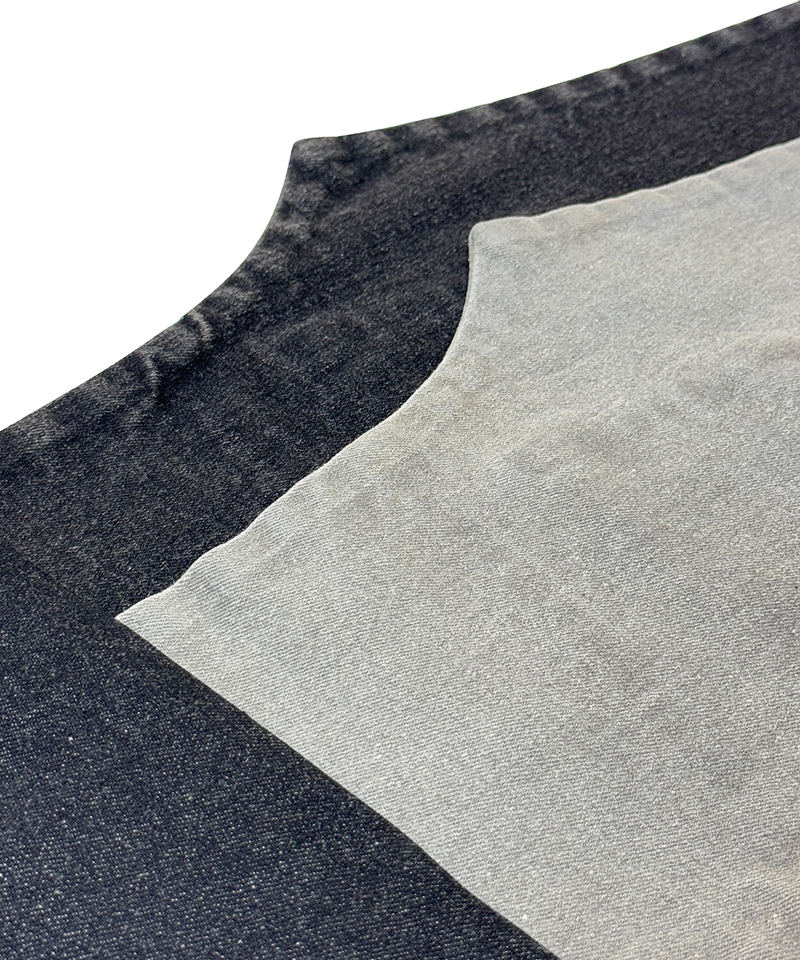
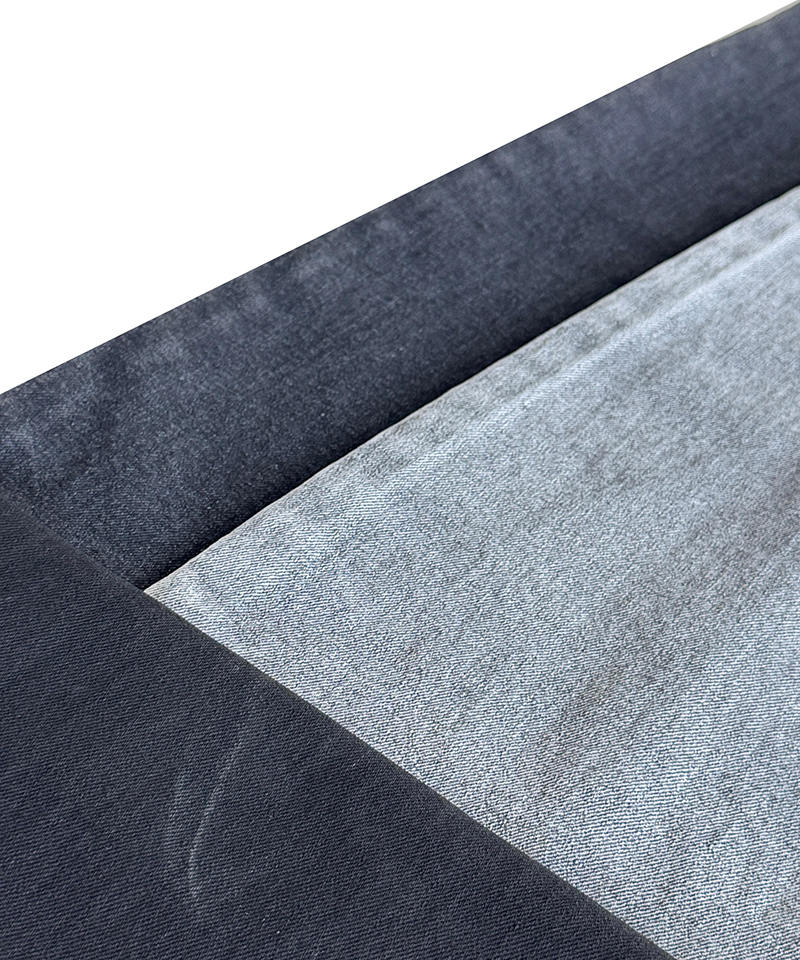
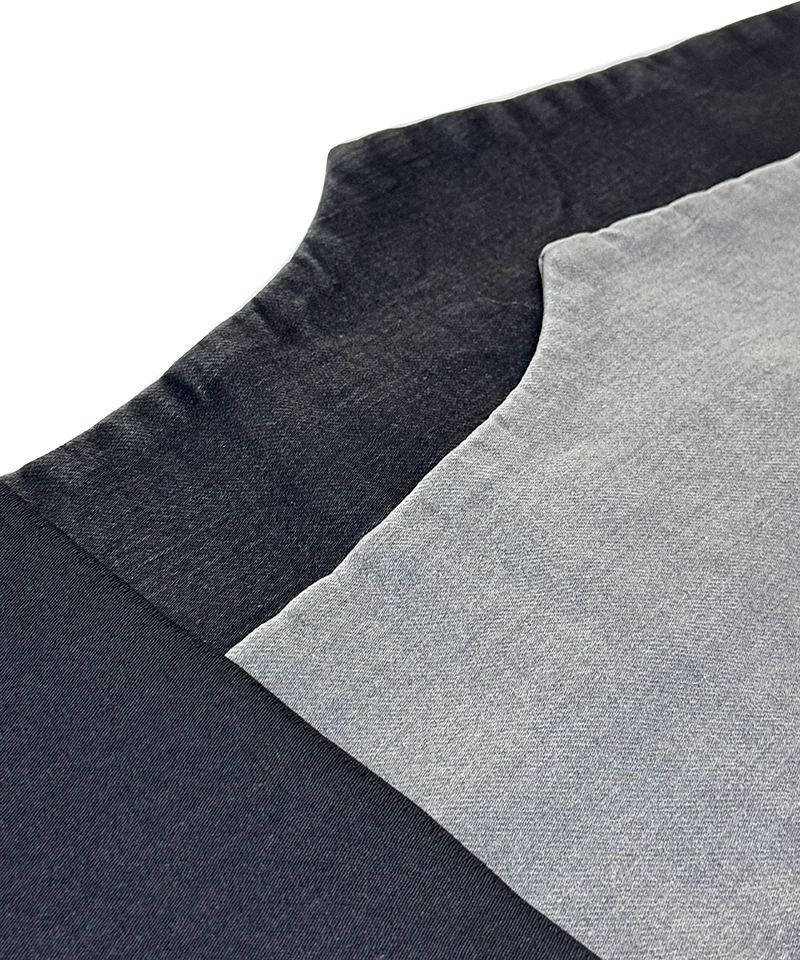
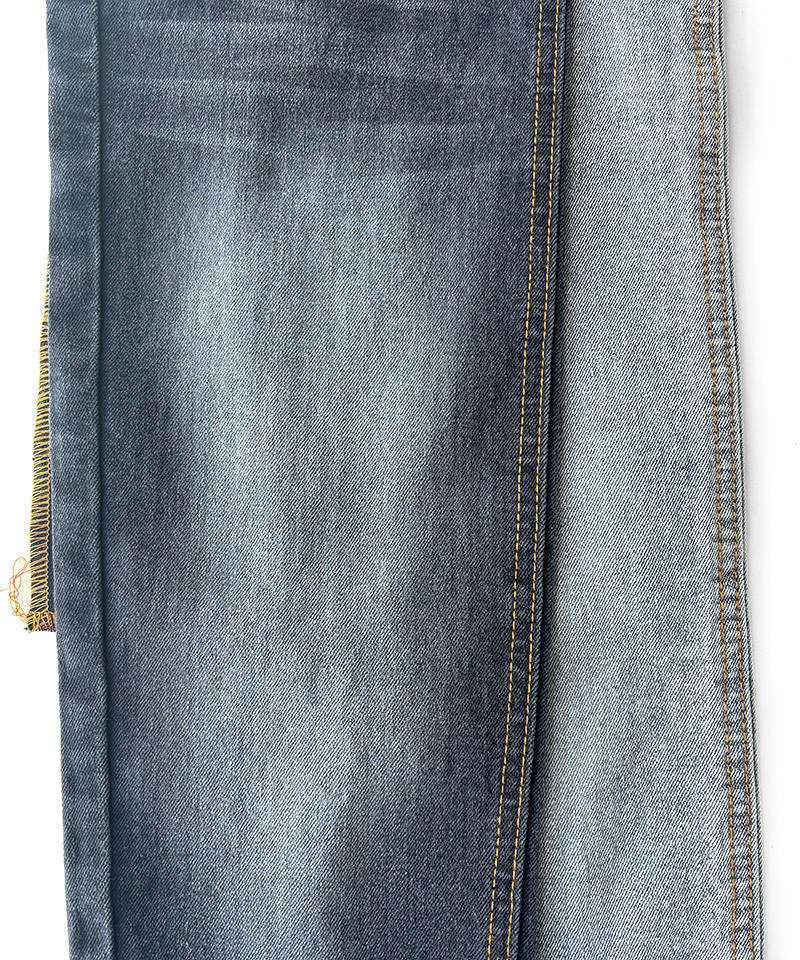
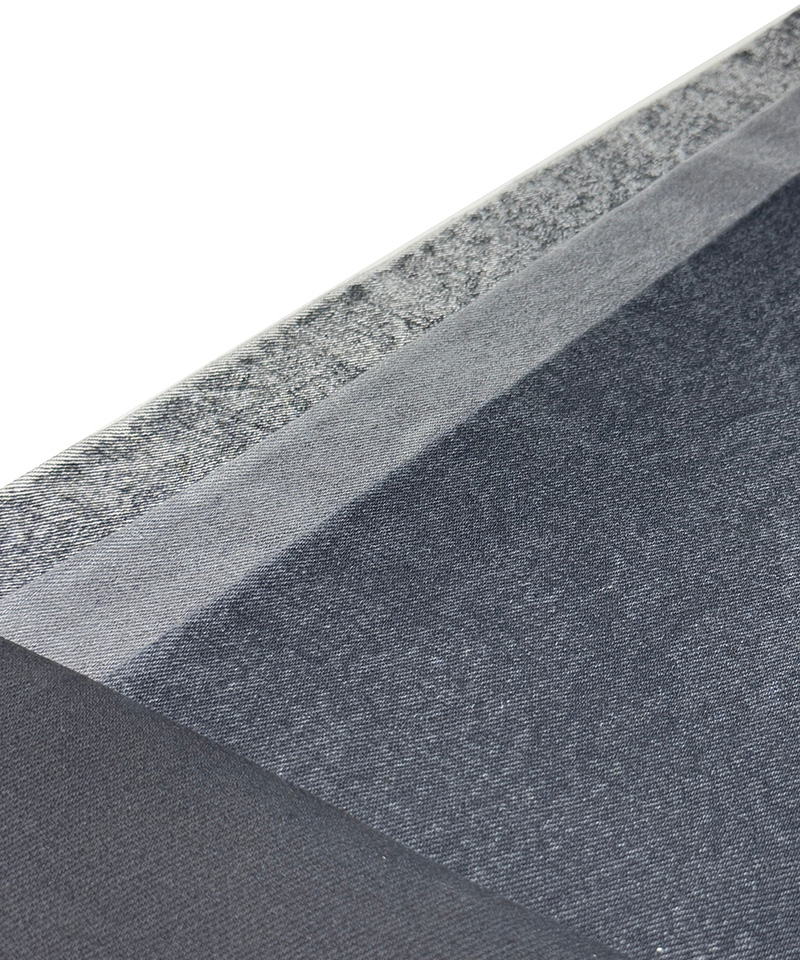
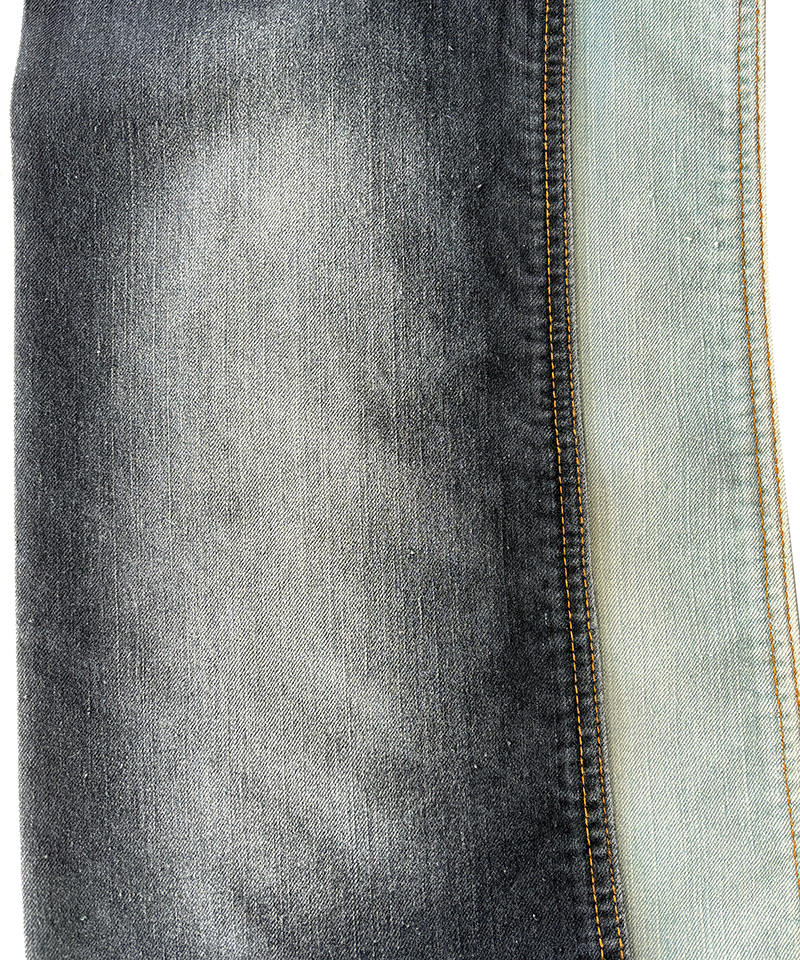
Dye depth is the first quality factor that reads on the garment table, and in black stretch denim fabric it separates a premium roll from a commodity roll. Sulphur black is the standard dye for black denim because it builds good depth on cotton at economical cost. Its failure mode is crocking: loose dye rubs off on white pocketing or drops into the first home-laundry cycle. The fix is double dyeing - what mills call black/black, where both warp and weft are dyed - and the extra pass shows in the price. A single-dyed cloth bleeds more in the first wash and reads blue-grey at the selvedge; a black/black construction reads uniform through the core.
Single-dyed blackLower cost. Dark face, greyer reverse, higher first-wash bleeding. Suitable for dark washes where the fabric will be garment-finished anyway.
Black/blackHigher cost. Uniform dark core, better crocking values, stable shade after wash. Required for cuffed hems, jackets and styles where both sides are visible.
One production point matters before sampling: black dye is applied before weaving, so a shade change means the mill must re-dye the warp rather than adjust a finishing bath. That is why black strike-offs take longer than indigo ones, and why an approved black shade reference should be written into the contract.
If your brand publishes a restricted substance list, ask whether the sulphur black bath is reduced with glucose-based chemistry rather than sodium sulphide. The reagent changes the certificate paperwork but not the colour, and suppliers who dye in-house - like XINBAILI - can usually document this step. The full sequence, from warp preparation to the dye box, is covered in the mill's explanation of dyeing before weaving.
Pre-Order Checklist: Evaluating Black Stretch Denim Fabric Before Bulk
A pre-order evaluation of black stretch denim fabric takes under an hour if you run the same checks in the same order. Flat-sheet inspection catches most problems that later show up on finished garments.
Compare weight and hand against the approved reference under the same lighting; a 0.5 oz deviation changes the drape of a 9 oz jean.
Run the 10 cm recovery test on the weft direction and record growth after 30 minutes.
Wash a 30 cm swatch three times at 40 degrees Celsius and check the shade band against the lab dip.
Rub dry and wet with white cotton cloth; deep black fabrics should not transfer heavy colour in either condition.
Measure width and thickness across the roll end; list any variation above 1 cm in width or 0.2 mm in thickness.
Sew one garment, not a flat coupon, and evaluate the black shade after the intended wash cycle.
Strike-off rule: order 5-10 m before bulk. A flat sample does not tell you how a black stretch denim will behave after a stone wash or enzyme rinse; a sewn garment does.
Black Stretch Denim Fabric: Questions Buyers Ask at the Sample Stage
Is black stretch denim fabric more expensive than indigo stretch denim?
Generally yes, for the same weight and elastane content. Sulphur black dyestuff is cheap, but reaching a deep, level black often needs a double dye pass, and the extra processing raises conversion cost by roughly 8-15 percent depending on the mill. Compare single-dyed and black/black quotes separately.
What does black/black mean on a denim spec sheet?
Black/black means both warp and weft are dyed black, so the reverse side of the fabric is dark as well. Single-dyed black stretch denim has a lighter reverse that turns bluish-grey after washing. Use black/black for cuffed hems, jackets and garments where the inside is part of the design.
How can I test whether a stretchy black denim will sag at the knee?
Mark a 10 cm segment in the weft direction, pull to maximum elongation, hold for 30 seconds, release and measure after 30 minutes. Residual growth above 1.2 cm means the fabric will bag on a customer. A super-stretch fabric with weak recovery is a worse choice than a standard-stretch fabric that returns fully.
Why do black stretch denim samples look different after the first wash?
Sulphur black overdye sits largely on the fibre surface, so first-wash bleeding is expected. The issue is scale: if the shade drops more than one grey-scale step after a programmed wash, ask for black/black construction or a higher dye concentration at the warp stage.
Bottom line: verify recovery first, dye depth second, and weigh the fabric on arrival.


 English
 Español