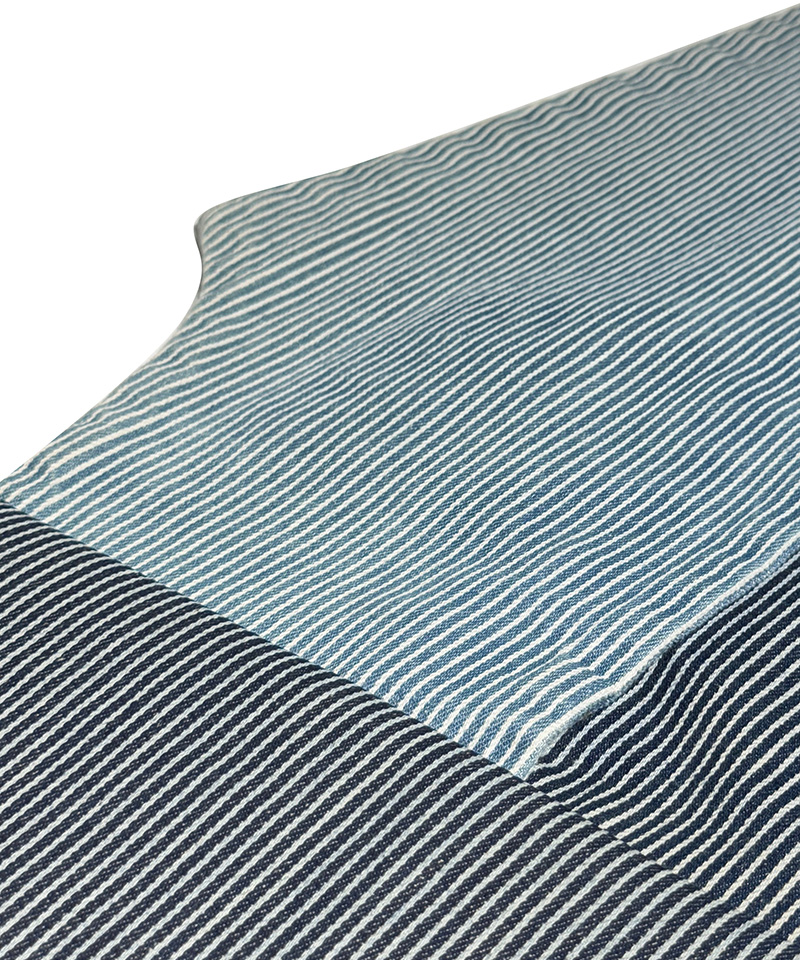
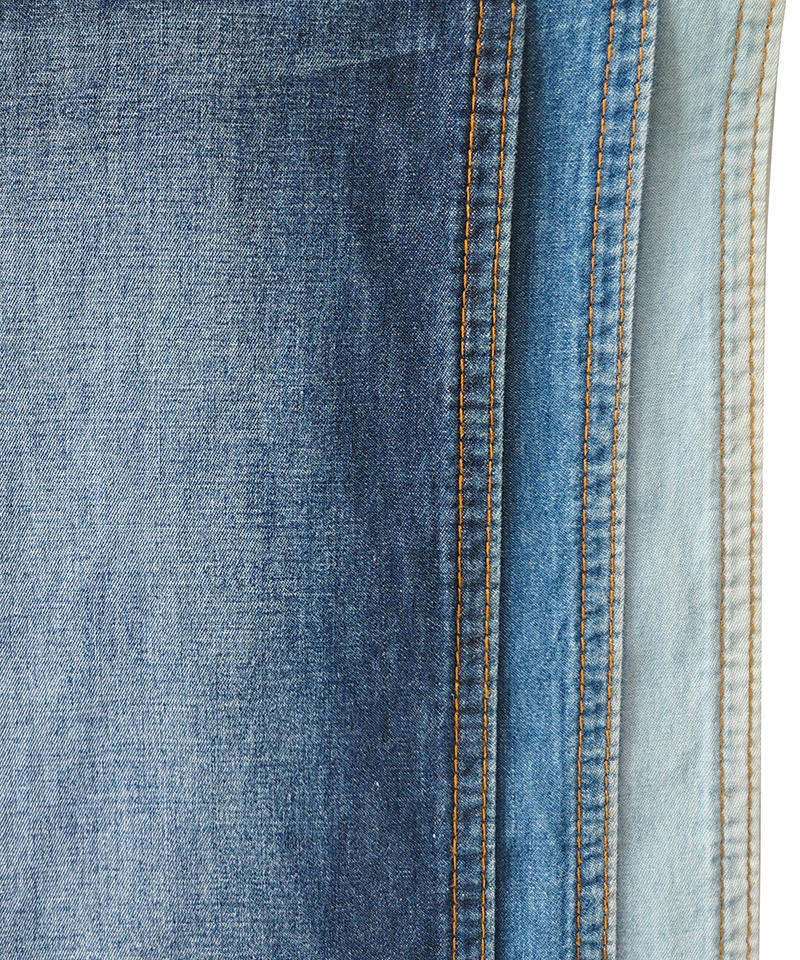
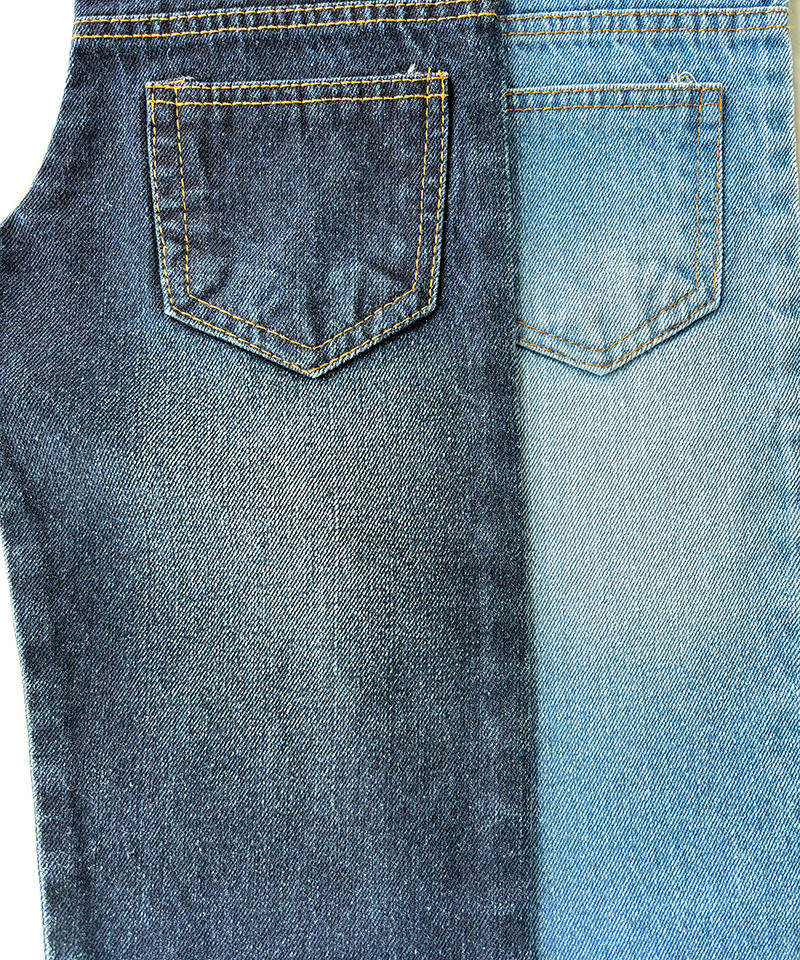
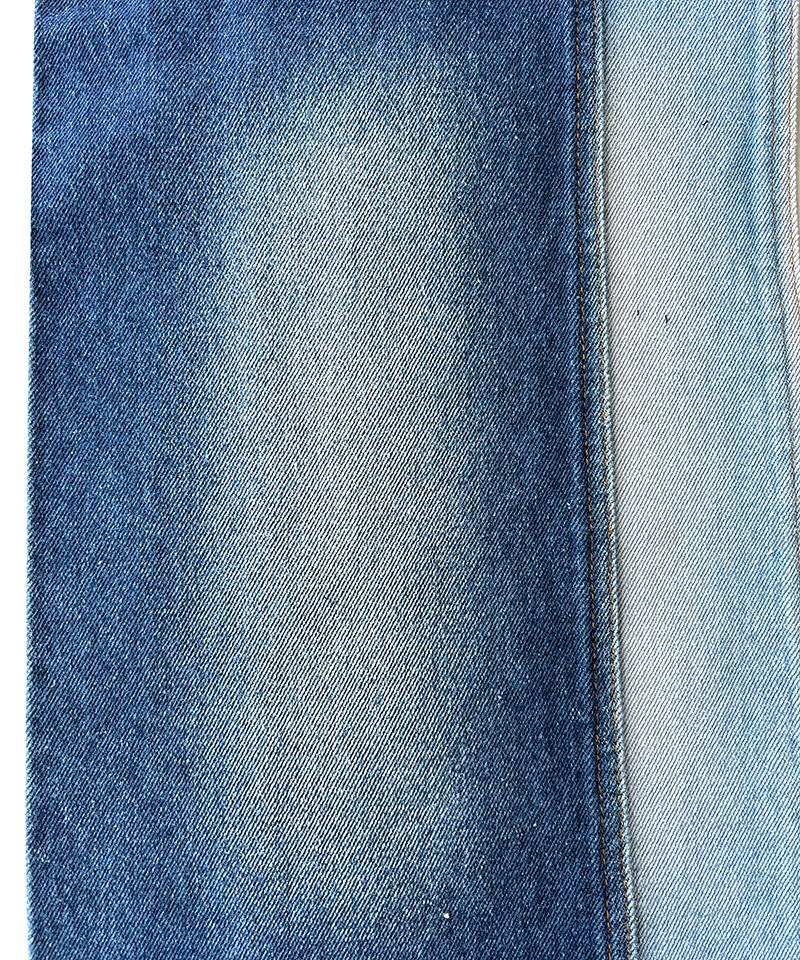
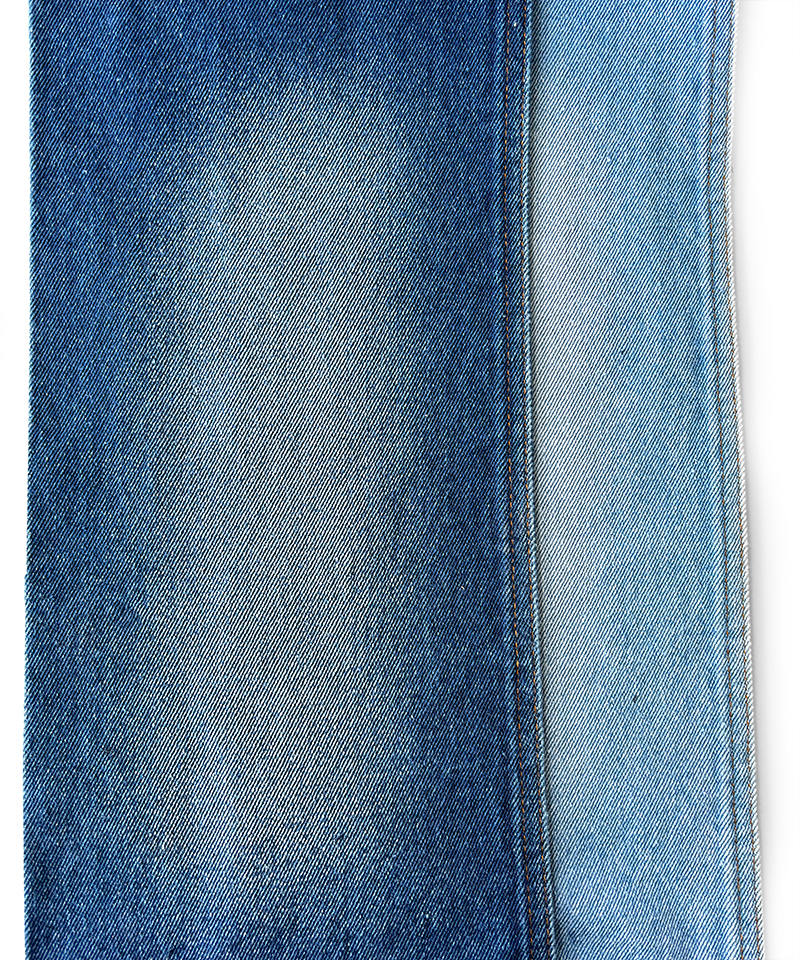
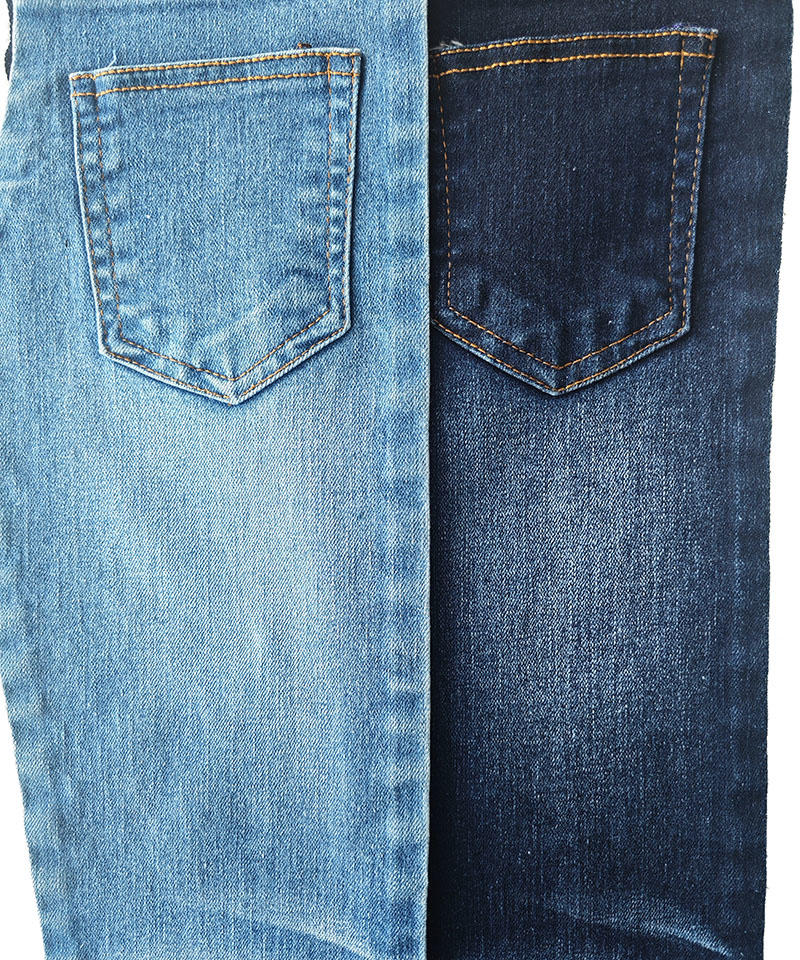
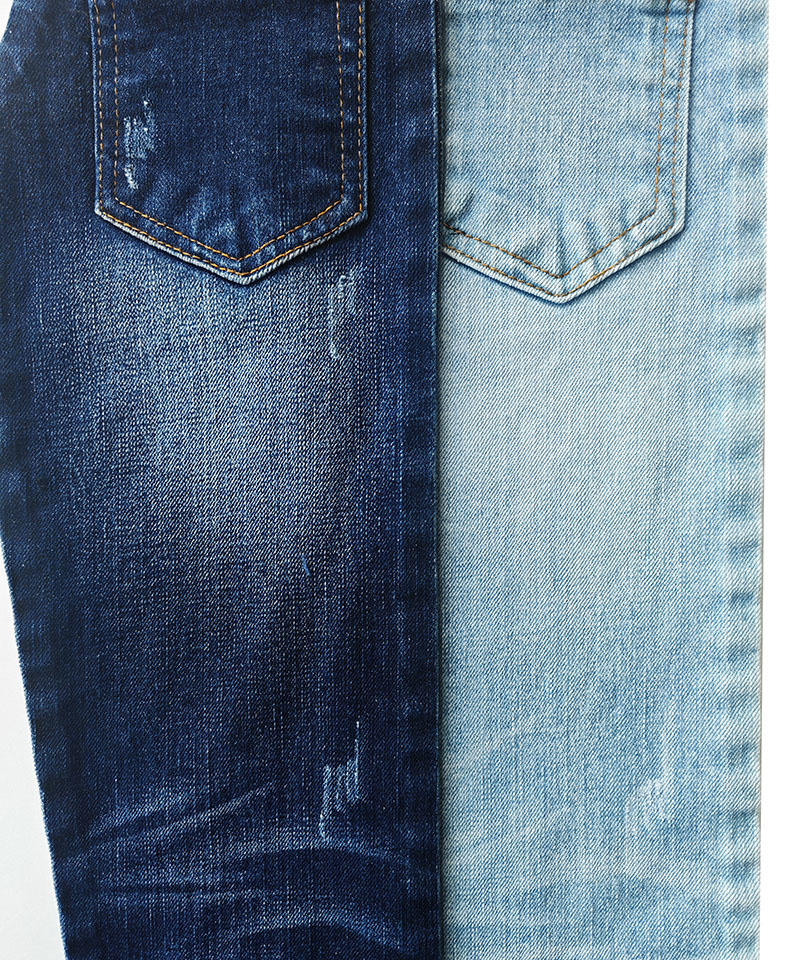
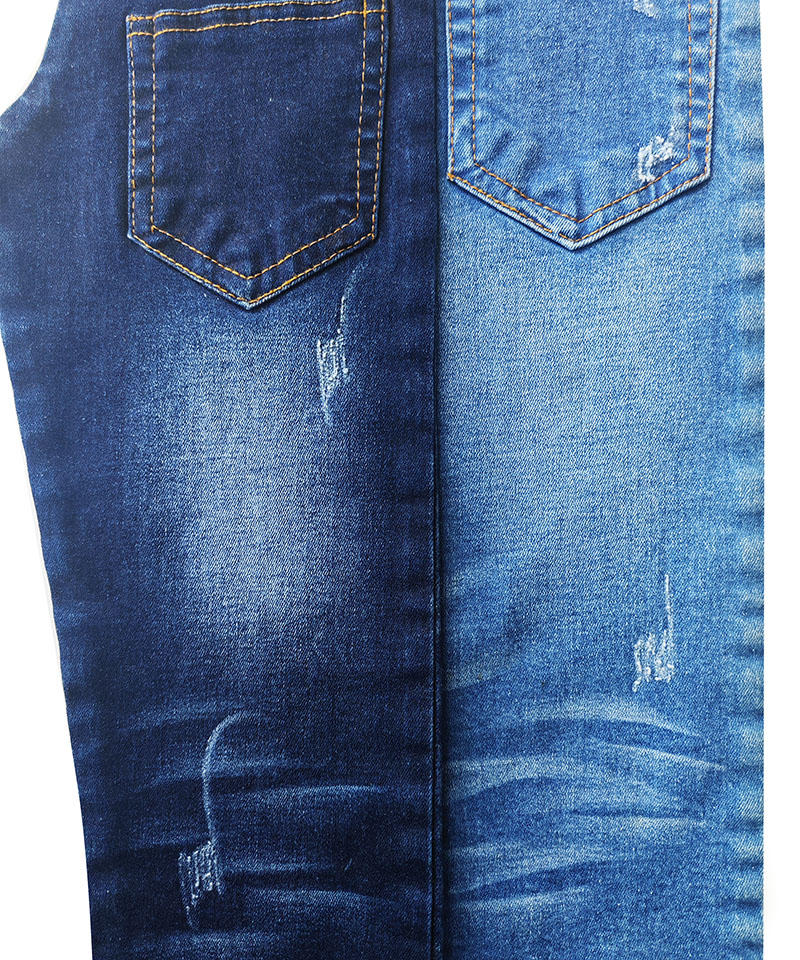
A workwear buyer sent one line to three mills: "heavy weight cotton denim fabric, 12 oz minimum." The quotes came back at 9.5 oz, 12.8 oz and 14.5 oz. That 5 oz spread changes hand feel, sewing cost and wash-down behaviour enough to re-route an entire collection. Heavy weight cotton denim fabric is a specification space that starts at 12 oz/yd2 (407 g/m2), and brands that source it well judge weight together with weave, stretch and finishing, not as a single number.
Rule of thumb: heavy weight cotton denim fabric starts at 12 oz/yd2 (407 g/m2). Changzhou Xinbaili Textile Co., Ltd (Xinbaili) offers heavy SKUs up to 13.7 oz, roughly 464 g/m2.
What Is Heavy Weight Cotton Denim Fabric?
Heavy weight cotton denim fabric is a 100% cotton or cotton-dominant twill woven at 12 oz/yd2 or more, with a firmer hand, slower drape and higher yarn density than mid-weight denim. In B2B spec sheets, "heavy" is a mill convention: below 12 oz a fabric is classified as mid weight or light weight, and quoting a 10 oz roll as heavy will fail a technical review.
Weight is quoted in ounces per square yard in most Asian and North American mills, while European buyers ask for GSM (grams per square metre). One oz/yd2 equals 33.9 g/m2, so the heavy band runs from 407 g/m2 at 12 oz to about 475 g/m2 at 14 oz. At 12 oz, one linear metre of 150 cm-wide fabric weighs roughly 610 g; a 1,000-metre order therefore moves about 610 kg of cloth, which is why heavy weight lots carry higher freight and storage costs per unit.
Definition
Heavy weight cotton denim fabric: a woven cotton or cotton-blend denim of 12 oz/yd2 (407 g/m2) or more, typically in 2/1 or 3/1 twill, selected for structured jeans, jackets and workwear programs.
Denim weight classes used by mills, with GSM equivalents and typical end uses.
| Class |
oz/yd2 |
g/m2 |
Typical end use |
| Light |
4-6.9 |
136-234 |
Shirts, light dresses |
| Light-mid |
7-9.9 |
237-336 |
Summer skirts, childrenswear |
| Mid |
10-11.9 |
339-403 |
Everyday jeans, casual jackets |
| Heavy |
12-13.9 |
407-471 |
Classic jeans, trucker jackets, workwear |
| Ultra-heavy |
14+ |
475+ |
Rigid workwear, selvedge-style cuts |
Where heavy weight cotton denim fabric sits on the weight scale
4-6 oz / shirts136-234 gsm
7-9 oz / summer237-336 gsm
10-11.9 oz / jeans339-403 gsm
12-13.9 oz / heavy407-471 gsm
14+ oz / workwear475+ gsm
Why Weave Construction Defines Heavy Weight Denim
Weave construction decides how a heavy cloth feels, drapes and wears, so it is the second spec to lock down after weight. Most heavy weight cotton denim fabric is built on a 3/1 right-hand twill, where each warp yarn floats over three weft picks before interlacing, producing a dense surface with a visible diagonal line and good abrasion resistance.
3/1 twill = three warp floats over one weft pick. This is the workhorse construction for 12-14 oz denim.
- 3/1 right-hand twill - standard for 10.5-13.7 oz jeans; cleanest rope-dye coverage.
- 3/1 left-hand twill - softer hand; preferred for brushed and washed-down heavy denim.
- 2/1 twill - balanced structure; common at 5-8 oz but also found in some heavy blends.
- 4/1 satin - smooth, lustrous face with a longer float; used for dressier heavy denim.
Yarn quality matters as much as the weave. Slub yarns in the warp create the irregular surface that hides dye variation and gives a dry, peached hand at 12 oz and above, which is why so many heavy weight SKUs in the Xinbaili catalog are listed as "slub indigo" or "slub black" constructions.
Stretch vs Non-Stretch Heavy Weight Cotton Denim
The core decision after weight is stretch. Non-stretch heavy weight cotton denim fabric, usually 100% cotton, holds a crease, breaks in slowly and fades with the sharp whisker lines that rigid denim buyers want, but it has no give across the hips and knees. Stretch heavy weight denim replaces part of the weft with 1-3% elastane or an elastane-polyester blend, adding roughly 15-30% one-way stretch and much better recovery for all-day wear.
100% Cotton Non-Stretch
- Holds pleats and creases through repeated washes
- Develops high-contrast whiskering on garment wash
- Shrinks 3-7% in the first wash; plan pattern ease
- Knee bags permanently once the cotton yields
Cotton + Elastane Stretch
- 15-30% weft stretch with only 1-3% elastane
- Recovers after sitting, bending and repeated wear
- Softer initial hand; less sharp whiskering
- Needs careful heat setting to control shrinkage
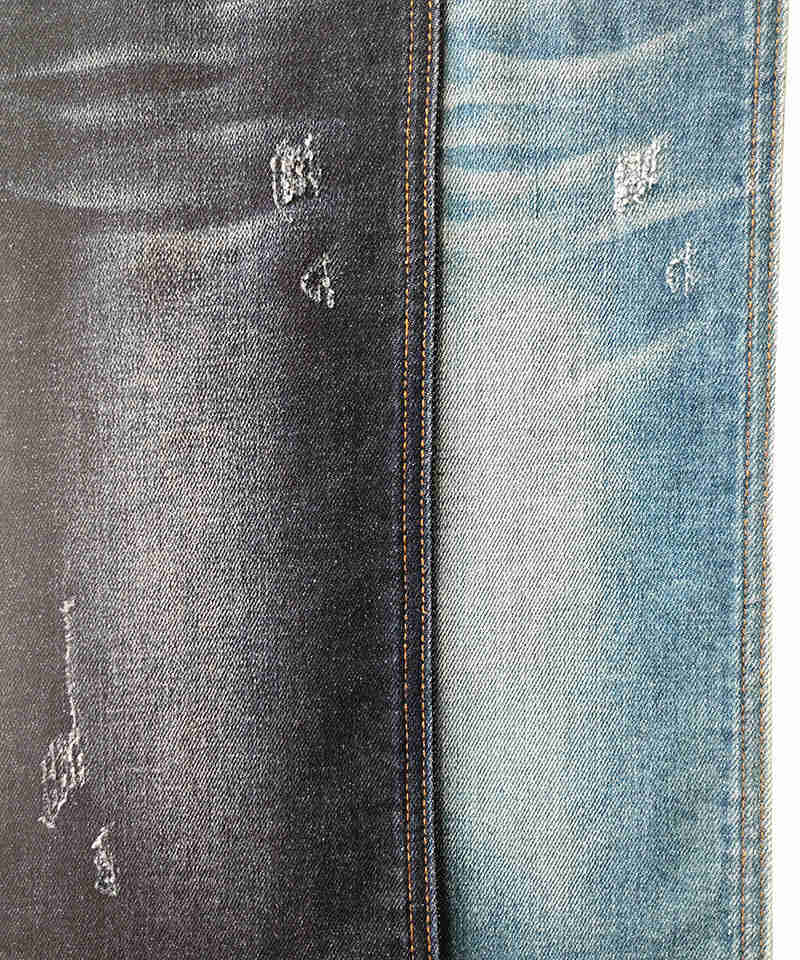 Indigo 3/1 Twill Heavyweight Stretch Denim Fabric #20056This 12.4 oz indigo stretch slub offers a rigid denim look with added recovery, suitable for women's and tapered fits where comfort and crease retention matter.View Product →
Mills such as Xinbaili produce heavy stretch denim in indigo and black-black at 10.5-13 oz. A 12.4 oz indigo 3/1 stretch slub, for example, gives the visual mass of rigid denim with the recovery needed for women's and tapered fits.
Finishing Options for Heavy Weight Denim
Finishing turns a heavy greige cloth into a garment-ready material, and it is the third variable in every specification. The same 12-13 oz construction can be brushed for winter warmth, bonded for windproof outerwear, or left raw for a laundered sell-through.
Brush plus bond equals a winter jacket grade: brushing raises weft fibres for a fleeced back, while bonding laminates a film that blocks wind and keeps the denim face intact.
- Brushed back - soft, warm interior for cold-weather jeans and trucker jackets.
- Bonded - windproof, structured layer for autumn and winter outerwear.
- Cold-feeling - mineral or cellulosic additives give a cool-touch surface for summer heavy denim.
- Enzyme softening - relaxes the hand without removing body weight.
Finishing effects commonly applied to heavy weight cotton denim fabric.
| Finish |
Effect |
Best for |
| Brush |
Raised weft fibres, soft interior |
Winter jeans, trucker jackets |
| Bonded |
Laminated film blocks wind |
Autumn and winter outerwear |
| Cold-feeling |
Cool-touch surface on contact |
Summer heavy denim |
| Enzyme softener |
Relaxed hand, retained weight |
Everyday washed bottoms |
Xinbaili's functional denim line includes heavy weight bonded and brushed jacquard constructions, which combine a 12 oz-plus cotton base with a fleeced or reinforced layer for outerwear programs.
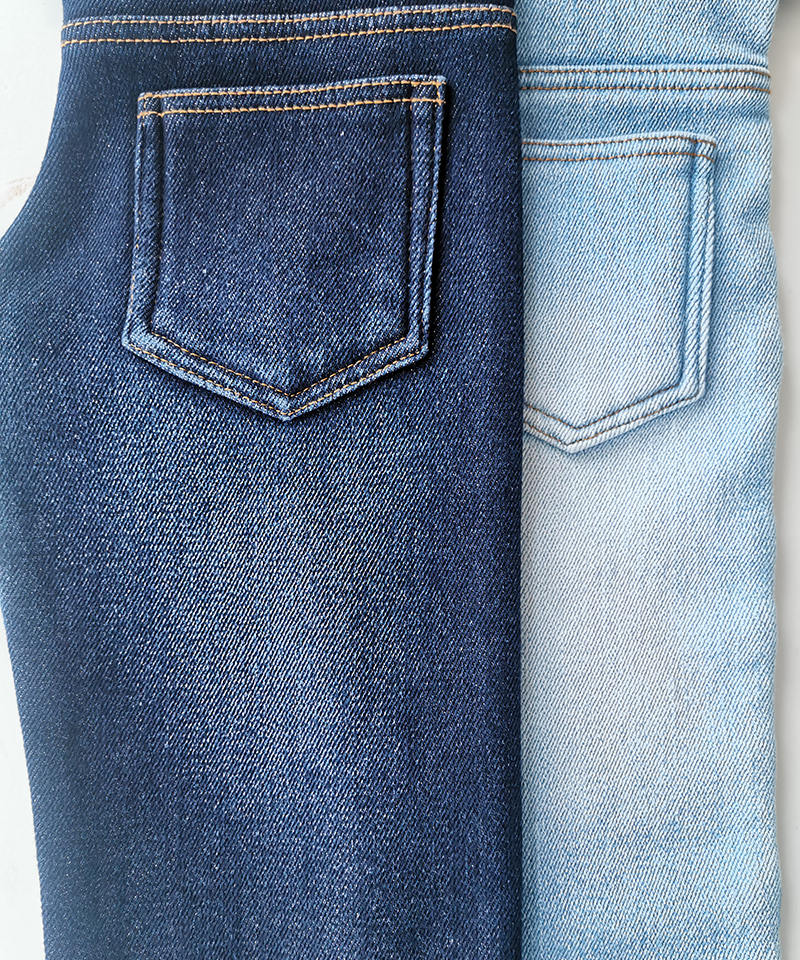 Indigo 3/1 Twill Heavyweight Stretch Bonded Denim Fabric #80005A bonded construction adds durability and a smooth finish to this heavy stretch denim, making it a practical option for jackets and structured outerwear in cooler climates.View Product →
Sourcing Checklist for Heavy Weight Cotton Denim
Before approving a heavy weight lot, verify five points instead of trusting a quoted number. Each step below prevents a costing or quality failure that shows up only after garment production starts.
Cost rule: every 1 oz increase adds roughly 34 g/m2 of fabric mass, raising both cloth cost and freight per container.
- Weigh the swatch. Confirm oz/yd2 on a conditioned sample, not on the data sheet. A 0.5 oz deviation changes cost per metre and wash behaviour.
- Specify stretch direction. State weft stretch, warp stretch or rigid in the tech pack so pattern and sewing use the same assumptions.
- Ask for shrinkage after the intended wash. Raw 12 oz cotton can shrink 3-7% in the first wash; garment wash softens the fabric but increases dimensional change.
- Check lot-to-lot shade. Rope-dyed indigo varies between dye lots; request an approved reference sample for every production lot.
- Run a wash-down test. The same greige cloth in stone, enzyme or bleach wash looks like three different fabrics at 12 oz and above.
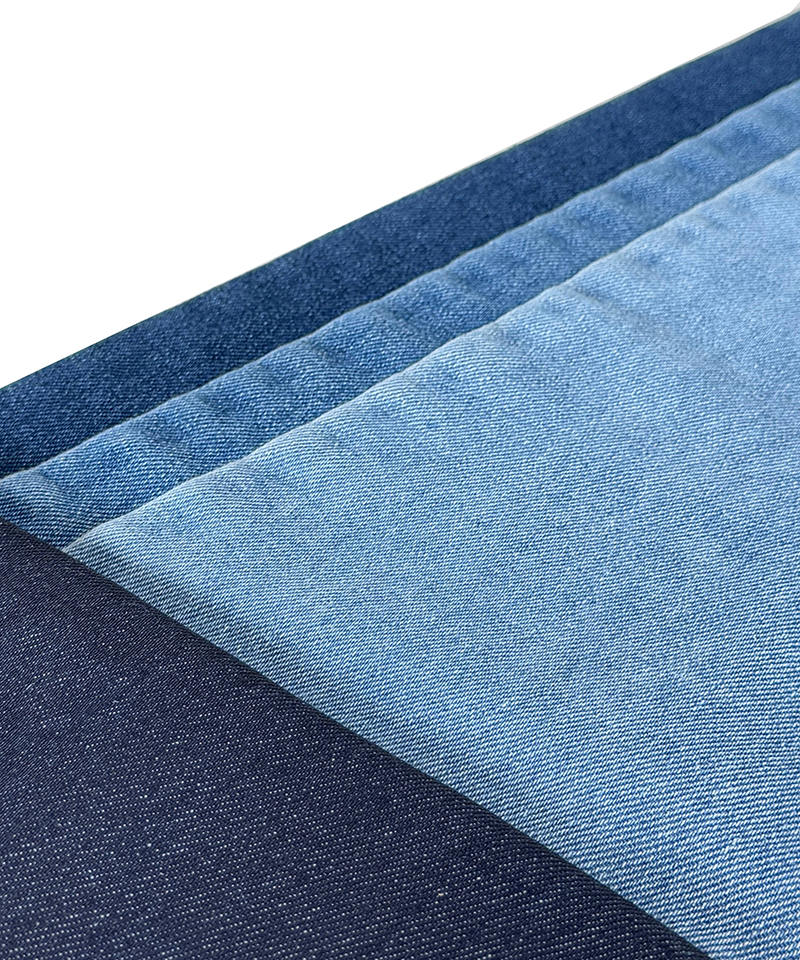 Indigo 3/1 Twill 12.8 oz Non-Stretch Denim Fabric #10003A 433gsm non-stretch indigo twill blend of cotton, polyester, and rayon, preshrunk for stability, positioned as a heavier alternative for structured garments when stretch is not required.View Product →
Xinbaili's catalog runs from 4.5 oz lightweight denim to 13.7 oz rigid constructions, with pure cotton, stretch, functional and fake-knit categories under one roof. Open the full collection to compare heavy weight SKUs side by side with lighter options.
FAQ: Heavy Weight Cotton Denim Fabric
How many ounces is considered heavy weight cotton denim?
12 oz/yd2 (407 g/m2) and above. The 10-11.9 oz band is mid weight, and 14 oz and above is ultra-heavy, usually reserved for rigid workwear or premium selvedge programs.
Is 12 oz cotton denim good for jeans?
Yes. 12-13 oz is the classic jeans zone: heavy enough to hold a crease and drape well, light enough to sew on standard lockstitch machines. Most five-pocket and staple jean programs sit inside this band.
Does heavy weight cotton denim fabric stretch over time?
100% cotton heavy denim has no elastane and grows in the weft direction with wear. Cotton-elastane heavy denim with 1-3% elastane delivers 15-30% weft stretch and recovers after washing.
What is the practical difference between 10 oz and 13 oz denim?
Roughly 102 g/m2 of fabric mass. A 10 oz denim drapes and sews like a light bottom; a 13 oz fabric stands up stiffly, fades more slowly, and needs stronger needles, thicker thread and heavier hardware.
A 12.5 oz 3/1 cotton twill with 2% elastane is the most common commercial compromise in heavy weight denim.


 English
 Español