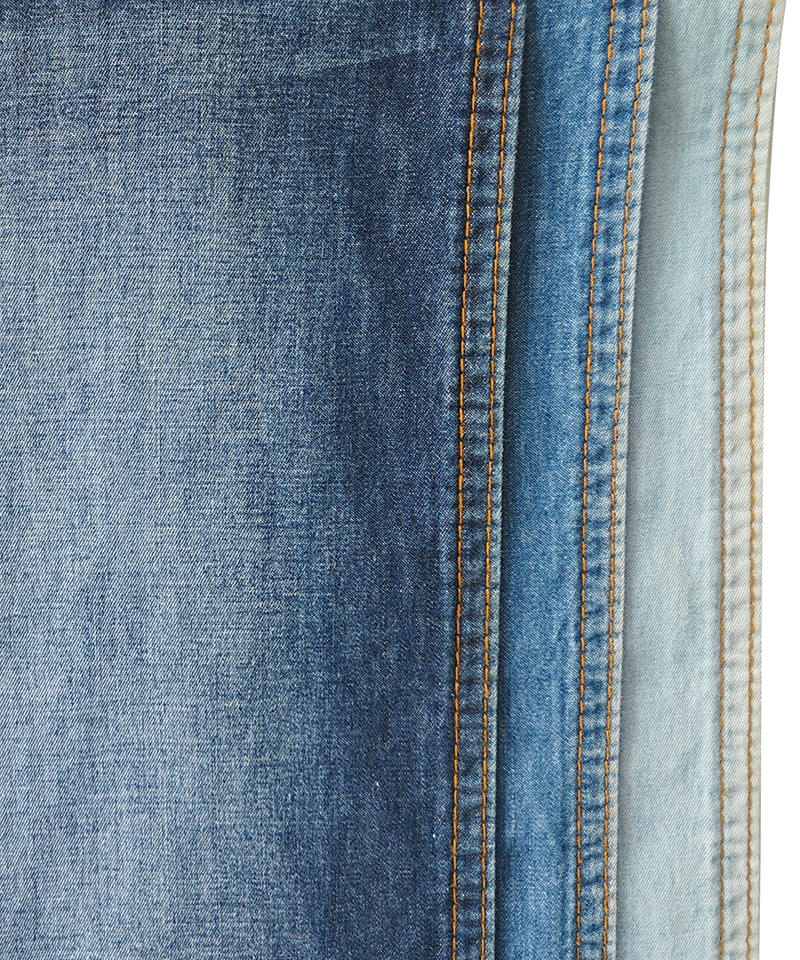
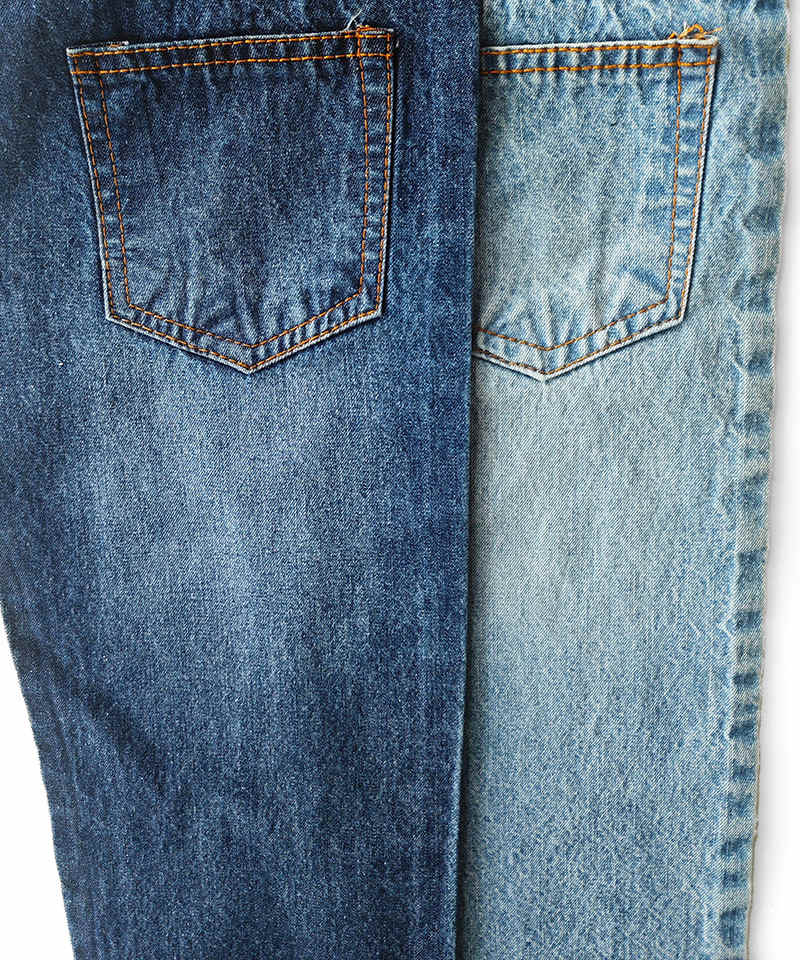
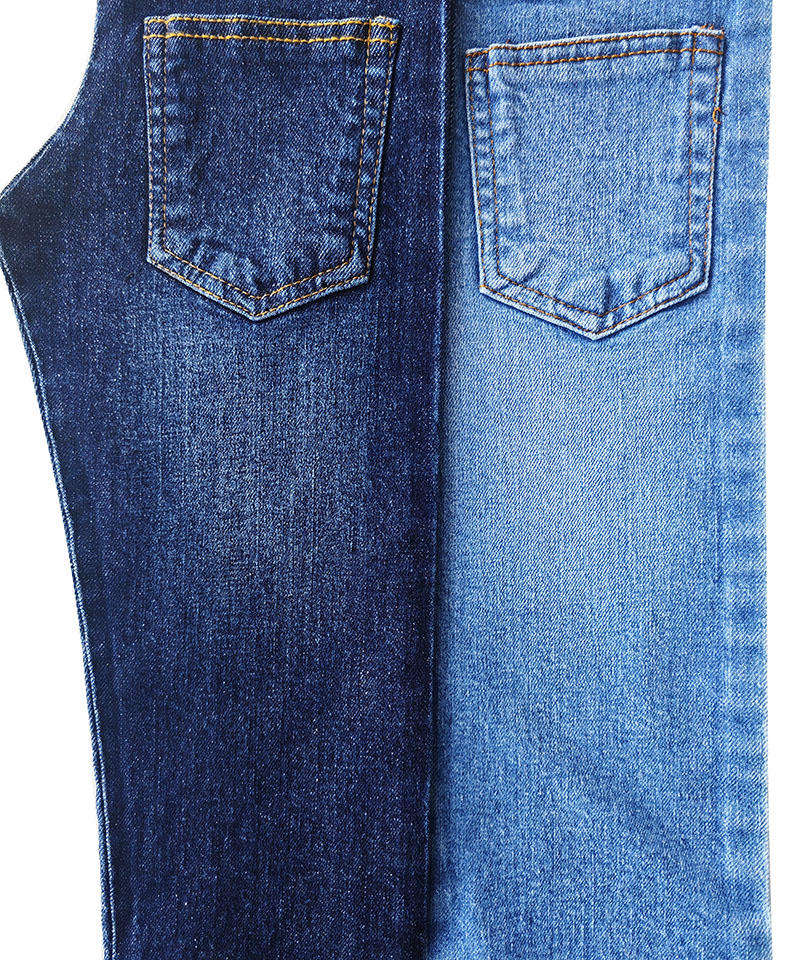
An inquiry that reads "indigo denim, 3/1 twill, 12 oz, non-stretch" looks complete until someone asks what fiber is actually in the cloth. Here is the direct answer: yes, traditional denim is cotton. Classic denim, the fabric behind rigid jeans, jackets, and workwear, is a cotton twill woven from indigo-dyed warp yarns and undyed weft yarns. The two words describe different things, though: cotton is a fiber, while denim is a fabric construction. Modern sourcing adds a second layer, because many fabrics sold as denim today blend cotton with elastane, polyester, or lyocell. Knowing where that boundary sits matters when you specify fabric, since fiber content drives hand feel, stretch, shrinkage, dyeing behavior, and price.
What the Words Cotton and Denim Actually Describe
Cotton is a natural fiber that grows in the boll of the cotton plant. Spinners grade it by staple length, fineness, maturity, and strength, because those properties determine how fine and how durable the resulting yarn can be. Denim, by contrast, is defined by structure rather than by fiber. It is a warp-faced twill: the dyed warp yarns run lengthwise and float over multiple weft picks. In the dominant 3/1 construction, each warp yarn passes over three weft yarns, which creates the diagonal ribbing on the face of the cloth. In traditional construction the weft is left undyed, which is why worn denim reads blue on the surface and whitish along the abraded ridges and on the reverse.
So the question "is denim cotton" mixes two categories, a little like asking whether a sweater is wool. The precise version is: which fibers is this particular denim made from? Historically the answer was almost always cotton. The name traces back to serge de Nimes, a sturdy twill produced in Nimes, France, and the cloth that dressed miners and railroad crews in the nineteenth century was cotton twill dyed with indigo. That association runs so deep that trade descriptions still treat denim as a cotton fabric by default, which is accurate for classic cloth and incomplete for modern blends.
Why Cotton Became the Standard Fiber for Denim
Cotton earned its role in denim for practical reasons, not tradition alone.
- Strength where it counts. Cotton fibers are strong and gain roughly 10-20% more strength when wet, which suits a fabric expected to survive repeated washing, abrasion, and hard wear. Twill interlacing helps as well, because fewer intersections let the yarns shift under stress instead of snapping.
- Comfort next to the skin. Cotton absorbs moisture and breathes, which is why 100% cotton denim stays wearable across a wide temperature range even at heavy weights.
- Affinity for indigo. Cotton yarn accepts indigo in the way that defines the denim look. The dye concentrates near the yarn surface rather than penetrating the core fully, so it abrades off the high points first as the fabric is worn and washed. That ring-dyeing behavior produces the fading denim users expect, and a fiber that does not take indigo this way simply does not behave like classic denim.
- Characterful aging. Cotton softens as it breaks in instead of pilling, so rigid cotton jeans record wear in creases and fades rather than losing structure.
This is why heavy non-stretch pure cotton cloth, typically 12 to 13.7 oz in a 3/1 twill, remains the benchmark for heritage jeans and workwear, and why mills keep dedicated pure cotton lines in production. Our own catalog runs from 4.5 oz lightweight 2/1 twill up to 13.7 oz heavy weight, all non-stretch cotton. A representative heavy weight pure cotton construction is the right reference point when judging any blend against the original:
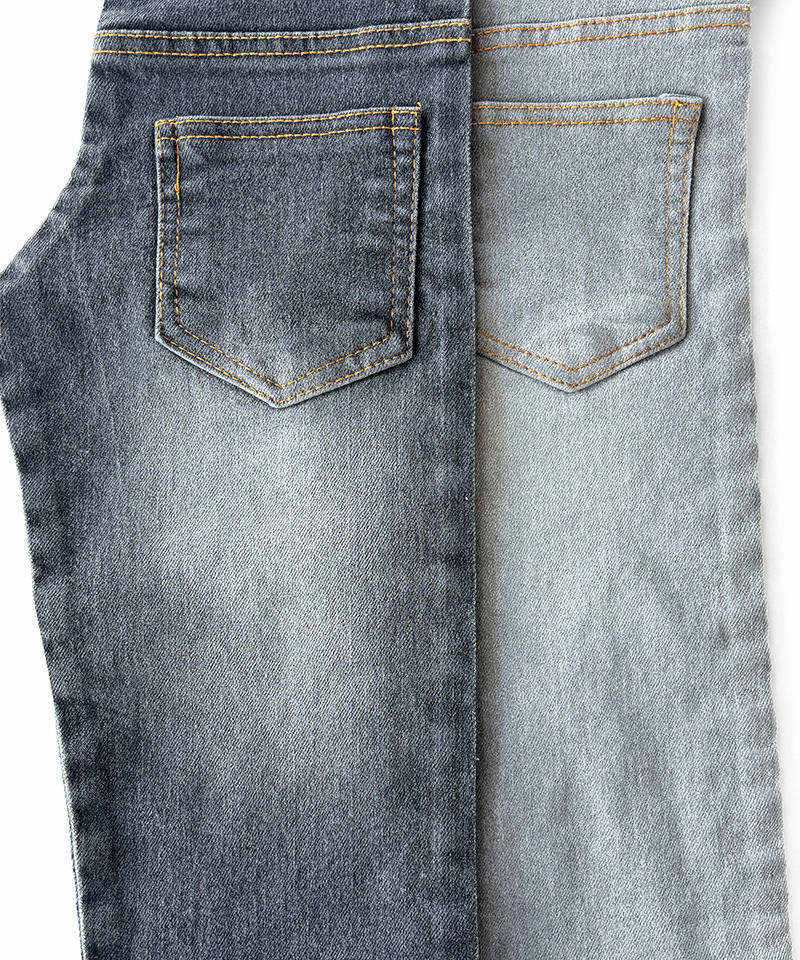
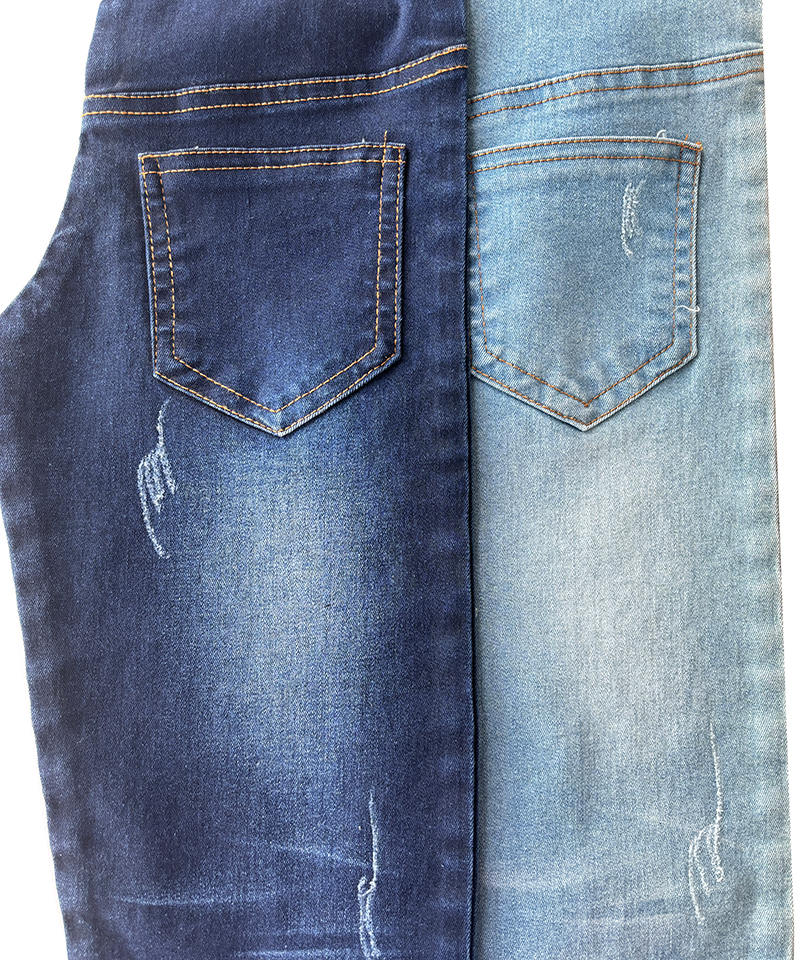
 Indigo 3/1 Twill Heavyweight Non-Stretch Pure Cotton Denim Fabric #10046This heavyweight pure cotton twill represents the non-stretch benchmark for heritage jeans and workwear, making it the right reference point when comparing stretch and blended denim against traditional all-cotton constructions.View Product →
When Denim Is Not 100% Cotton
Composition changed when fitted silhouettes demanded fabrics that stretch and recover. Today the word denim describes the twill construction and the indigo look; the fiber content can vary widely. Three blend families dominate the market.
Cotton Elastane Denim
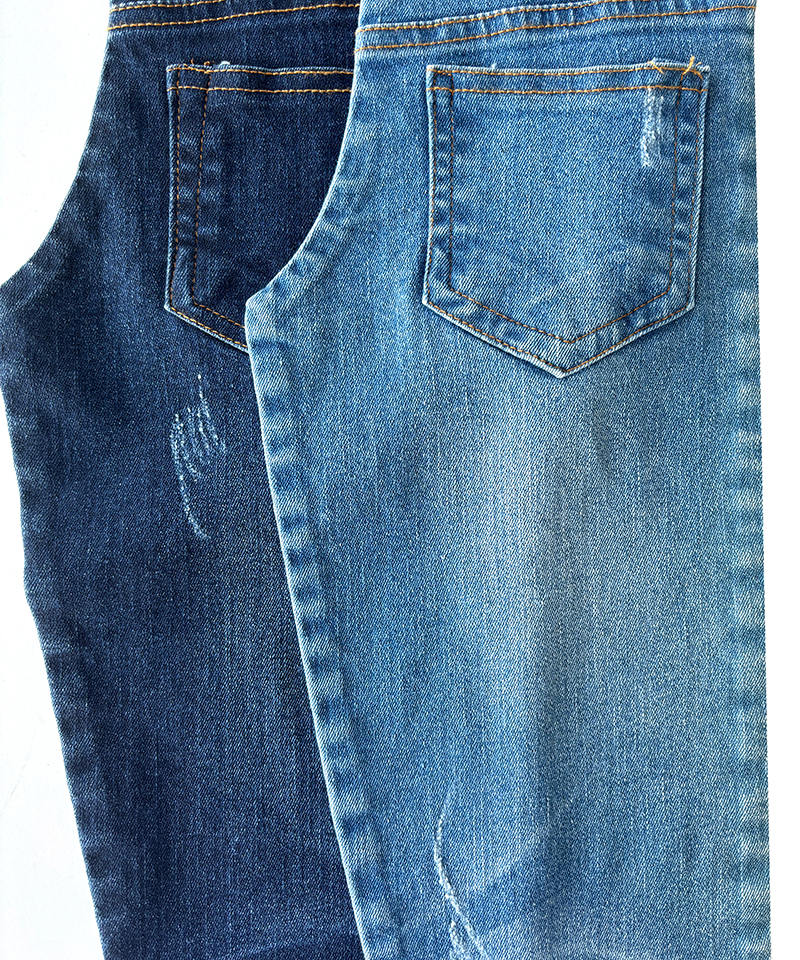
Adding 1-3% elastane to cotton transforms the wearing experience while keeping the surface appearance of classic denim. The fabric gains recovery, so jeans hold their shape through a full day of movement, and mills grade these cloths from standard stretch through high stretch to super stretch. That small elastane percentage matters enormously to fit and hand. The trade-off is that higher elastane content produces a softer fade pattern and less rigid aging than all-cotton cloth. A middle weight indigo 3/1 twill from this family shows the category well:
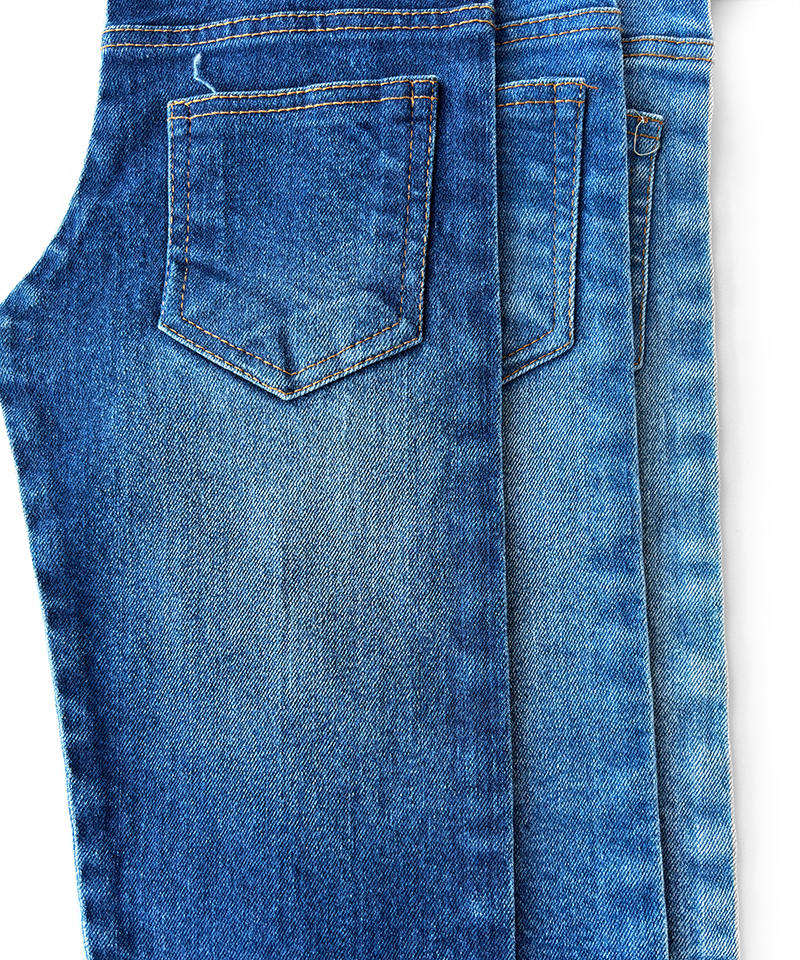
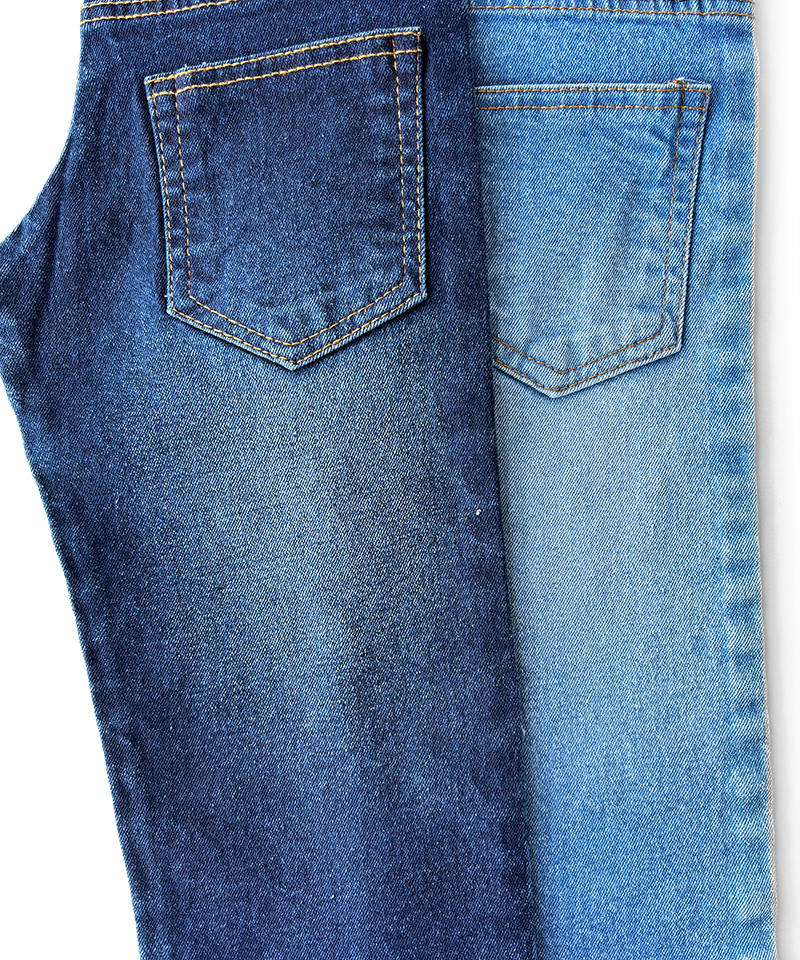
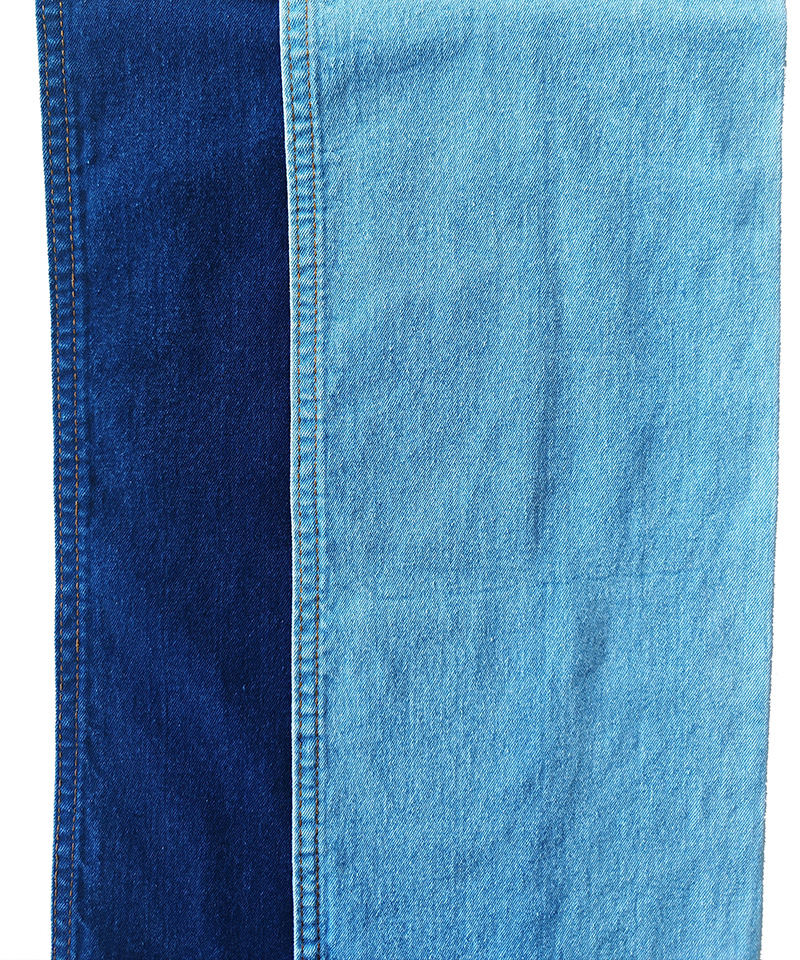 Indigo 3/1 Twill Middleweight Stretch Denim Fabric #20001A cotton-elastane blend in a classic 3/1 twill, this middleweight fabric shows how a small elastane percentage adds recovery and lasting shape retention while preserving the surface look of traditional indigo denim.View Product →
Cotton Polyester Elastane Denim
Polyester in the blend brings dimensional stability, abrasion resistance, and lower shrinkage. These fabrics, most often woven in the 9 to 12 oz range, hold their shape through repeated washing cycles, which is why they appear frequently in uniform programs and high-volume apparel where consistent fit matters more than a heritage fade.
Lyocell and Special Fiber Denim
Lyocell, a regenerated cellulose fiber, contributes a silky hand, fluid drape, and a cool touch against the skin. Blended with cotton and often elastane, it produces denim that reads premium and comfortable, popular in soft-touch and summer-weight programs. Some of the most interesting constructions combine cotton, polyester, elastane, and lyocell in a single cloth; a 12.8 oz stretch lyocell cold feeling denim is one example:
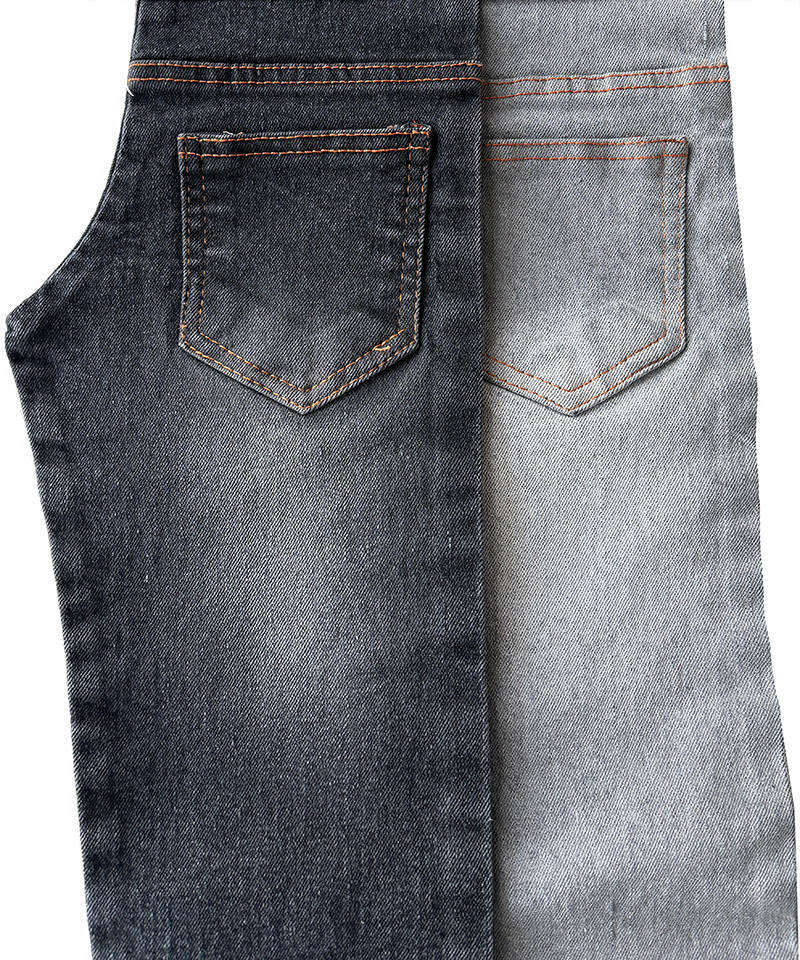
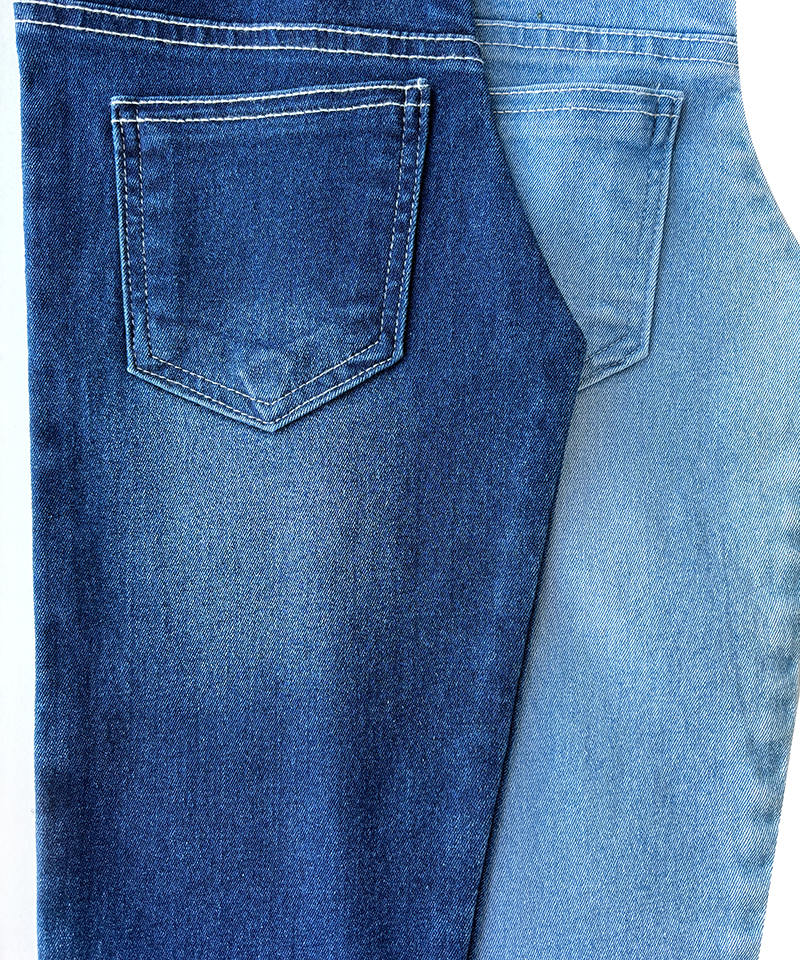
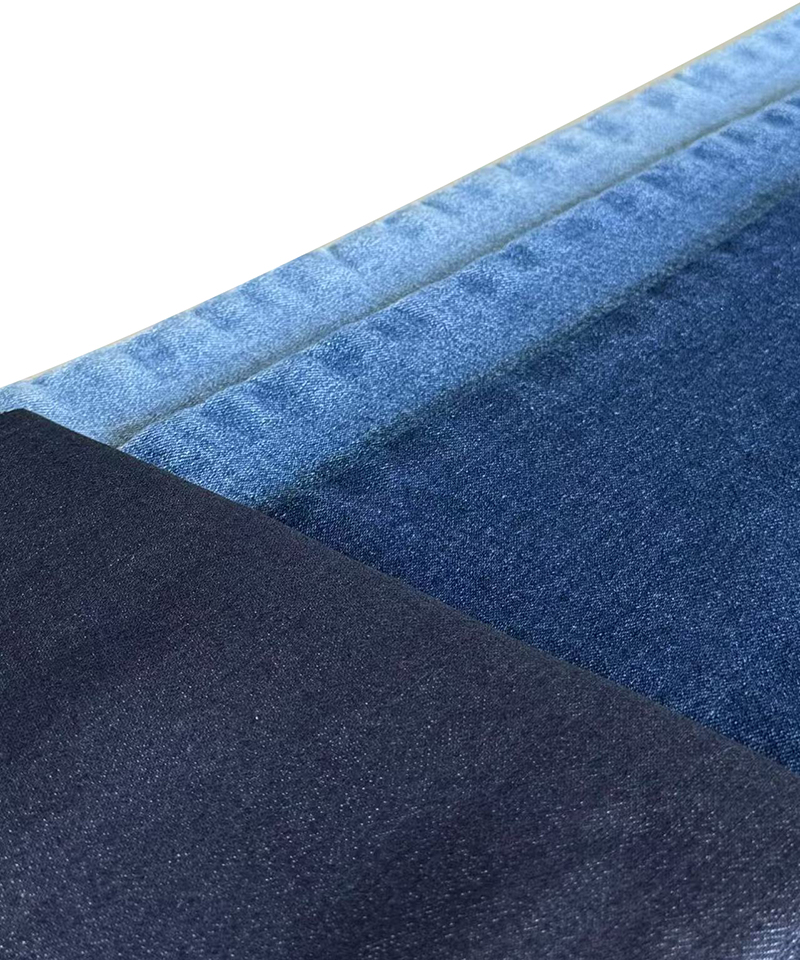 Indigo 3/1 Twill 12.8oz Stretch Lyocell Cold Feeling Denim Fabric #30080Blending cotton, polyester, and elastane with lyocell, this 12.8 oz stretch denim delivers a silky hand, fluid drape, and cool touch, illustrating the comfort-focused constructions popular in soft-touch and summer-weight programs.View Product →
How common denim compositions differ in feel, stretch, and typical end use
| Denim Type |
Typical Composition |
Hand and Wear |
Stretch Range |
Common Applications |
| Pure cotton denim |
100% cotton |
Rigid at first, softens with wear, fades characteristically |
Non-stretch |
Heritage jeans, jackets, workwear |
| Cotton elastane denim |
Roughly 97-99% cotton with 1-3% elastane |
Soft with visible give and recovery |
Stretch to super stretch |
Fitted jeans, comfort-fit pants, shirts |
| Cotton polyester elastane denim |
Cotton blended with polyester and elastane |
Smooth and stable, holds shape through wash cycles |
Stretch to high stretch |
Uniforms, shaped denim, volume apparel |
| Lyocell blend denim |
Cotton with lyocell, often plus elastane |
Silky, cool to the touch, fluid drape |
Usually stretch |
Premium soft denim, summer-weight styles |
If you are weighing a blend against all-cotton cloth, our comparison of how cotton elastane denim fabric performs against traditional cotton covers the differences buyers notice first: recovery, shrinkage, and the way each fabric fades.
How to Confirm What a Denim Fabric Is Made Of
Because "denim" no longer guarantees 100% cotton, treat composition as a specification, not an assumption. Four parameters on any reliable fabric listing tell you what you are actually buying.
- Composition breakdown. A proper specification lists fiber percentages, for example 98% cotton and 2% elastane. If a supplier describes cloth only as "denim," ask for the exact blend before quoting.
- Weight. Stated in ounces per square yard, weight signals the fabric class: under about 8 oz is lightweight, 8 to 12 oz is middle weight, and above 12 oz is heavy weight. Weight drives drape, durability, and the garment types the cloth suits.
- Weave notation. 3/1 and 2/1 indicate the classic twill constructions, while 4/1 satin denim trades rugged texture for a smoother surface with more sheen.
- Stretch class and finish. Non-stretch, stretch, high stretch, and super stretch describe recovery, while finishes such as PFD (prepared for dyeing), bonded, or brushed describe what happens after weaving.
Checking these four items takes minutes and prevents the most common specification mistake in denim sourcing: ordering cloth that matches a reference fabric's look but not its fiber content.
So, Should Your Denim Be 100% Cotton?
For heritage fits, heavy workwear, and garments meant to develop a personal fade pattern, 100% cotton denim remains the benchmark. For fitted silhouettes, all-day comfort, and fabrics that must survive frequent washing without losing shape, blends earn their place. Neither option is better in the abstract; the garment's purpose decides.
What matters for a sourcing team is a fabric partner who can supply the full spectrum on one platform: pure cotton non-stretch cloth from light to heavy weights, cotton elastane and cotton polyester elastane series across every stretch grade, and lyocell or functional finishes where the garment calls for them. You can browse the complete denim fabric catalog to see how wide that range runs. The answer to "is denim cotton" is yes for the cloth that started it all, and "check the spec sheet" for everything that came after.


 English
 Español